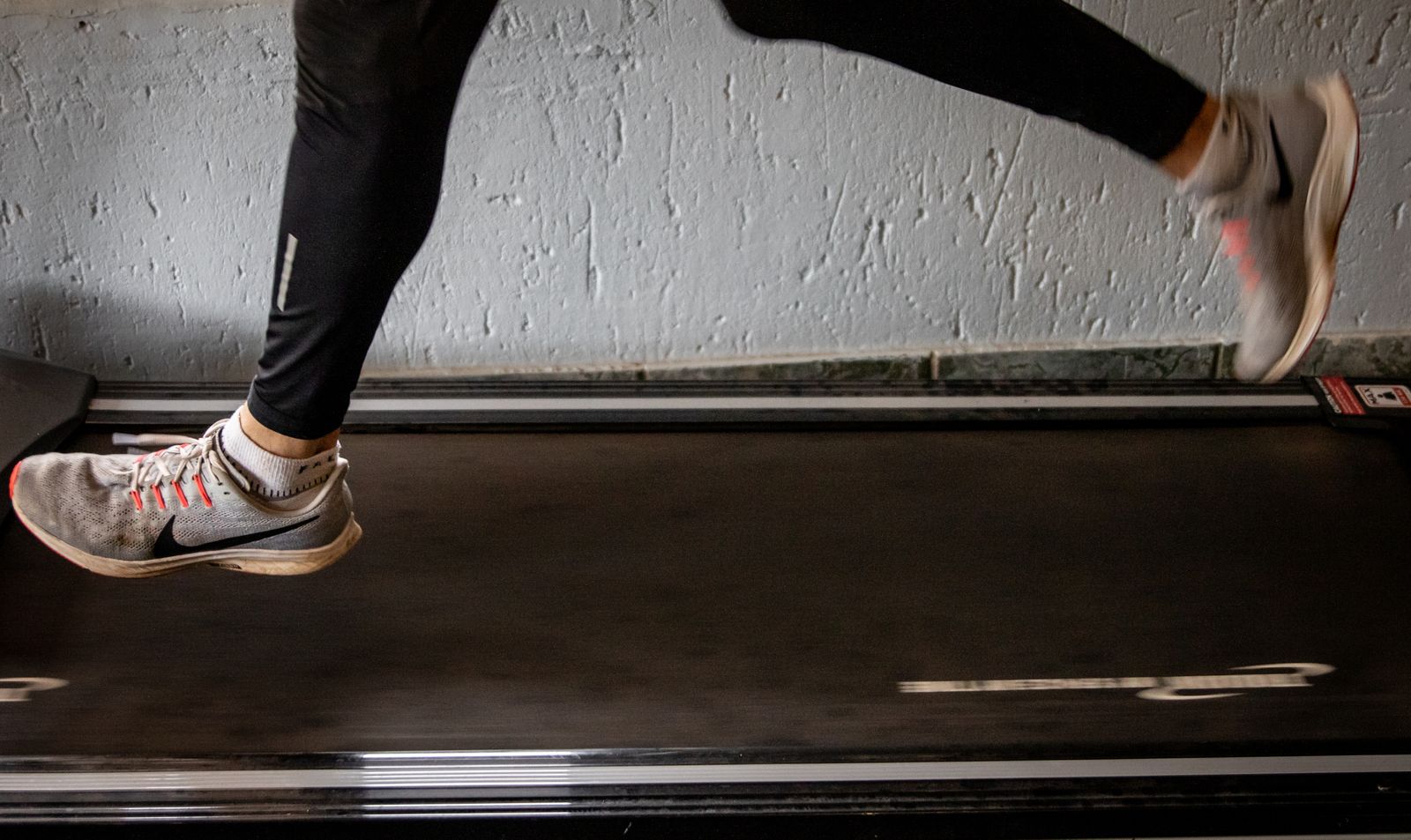
A running assessment is a structured look at how you run and how your body handles the load. Runners book it for many reasons: coming back after time off, building up to a first marathon, or wanting a plan for a niggle that keeps returning. Here is what the 75 minutes look like.
Your running history
We start with a conversation about your running: weekly distance, recent races, the surfaces you run on, your shoes, and anything that has stopped or slowed you down. Bring your training log or app if you use one.
Strength and mobility screen
Next come fifteen to twenty minutes of simple tests: single-leg squats and hops, calf raises, hip strength, balance and the range of motion in your ankles and hips. These show how well your legs cope with the repeated impact of running.
Treadmill video
After a warm-up, we film you on the treadmill from the side and from behind, at an easy pace and at a faster one. Your therapist slows the video down with you and points out what they see, from foot strike and cadence to how your hips and trunk move.
There is no single right way to run. The aim is to understand your running, not to make everyone look the same.
Your report
Within two working days you receive a written report with stills from the video, the results of each test, a set of exercises in our app and suggestions for your training week. If you want help putting it into practice, our Return to Run program builds on the assessment.
Wear your usual running kit and bring the shoes you run in now.
This article is general information, not medical advice. Call us to talk about your situation.