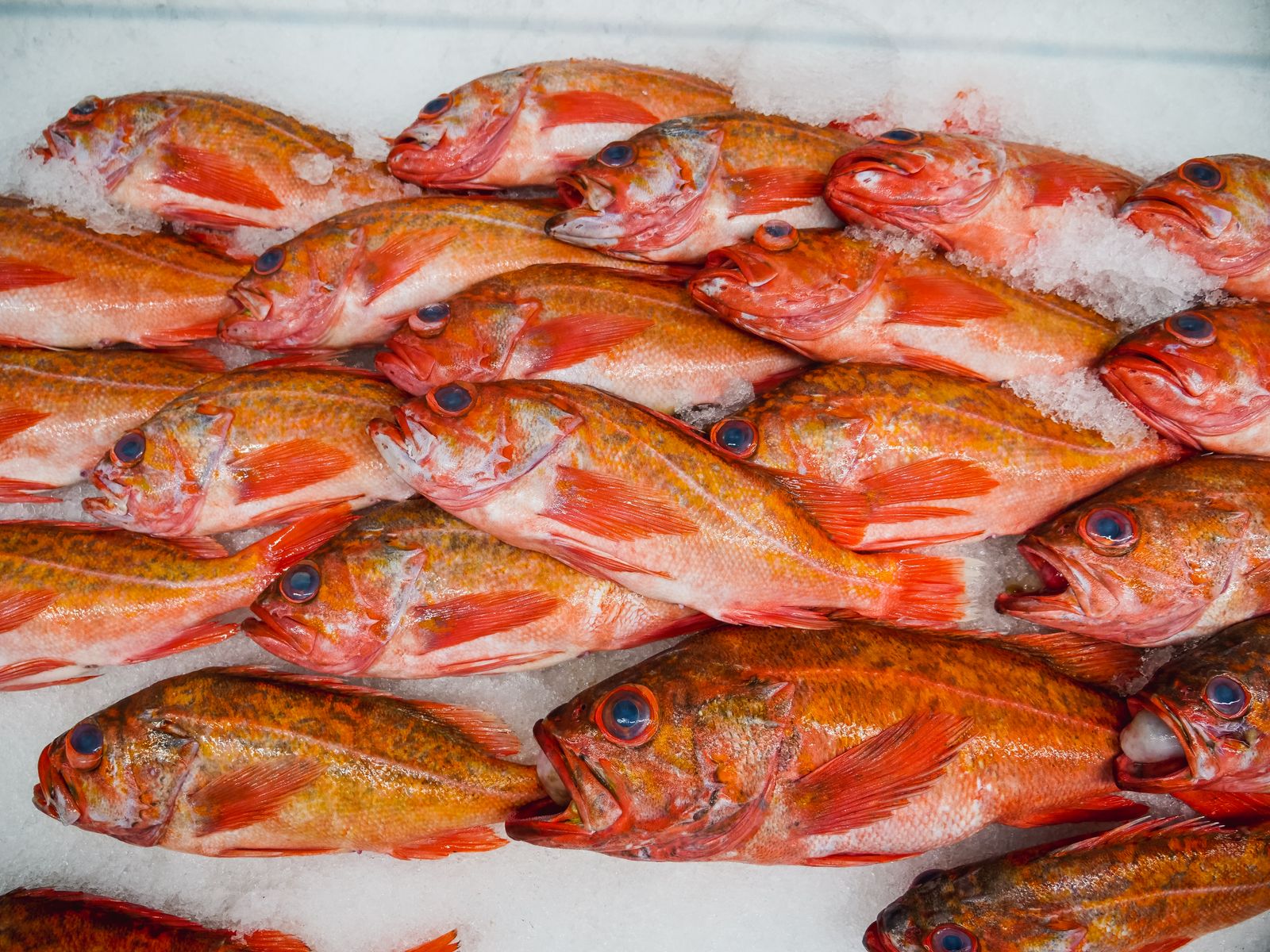
The by-the-piece board at our counter is written up every morning at 11:00, after the fish has arrived and the chef has checked each one. Some pieces are on it all year; others appear for a few weeks and then disappear until next season.
The fish we keep all year
King salmon, yellowtail, lean bluefin and freshwater eel are on the board most days. We buy them from a small number of suppliers we have worked with since we opened, and each delivery comes with notes on where and when the fish was caught.
Freshwater eel is always served cooked, glazed with a sauce we reduce for two days, and tamago is made in house every morning. Both are good places to start for guests who prefer cooked pieces.
Spring and summer
Warmer months bring sea bream, which we cure briefly between sheets of kelp, along with amberjack from Hawaii and spot prawns from the Pacific coast when the season opens. These lighter fish lead the omakase in summer.
Summer is also when the board is at its shortest on some days. A warm week can mean a delivery does not reach the standard we want, and the chef would rather offer ten good fish than fourteen ordinary ones.
Autumn and winter
Colder water means richer fish. Autumn brings salmon roe, which we marinate in soy and sake for two days, and mackerel, which we salt and cure ourselves. Winter is the season for Hokkaido scallops and for the fattier cuts of tuna.
When a fish is out of season or a delivery does not meet our standard, it simply comes off the board for the day.
How the omakase is chosen
Each afternoon the chef chooses the seventeen pieces for the evening from what is on the board, building from lighter to richer fish. If you have a fish you love, mention it in your reservation notes and we will try to include it. Consuming raw or undercooked fish may increase your risk of foodborne illness.