Ask any sushi chef what matters most and many will say the rice. At Nagi we cook rice five times a day in small batches, so the counter always has rice that is fresh and close to body temperature.
Short grain, washed and rested
We use a short-grain rice grown in the Sacramento Valley, a short drive from the restaurant. It is washed until the water runs almost clear, left to soak and rest, then cooked in heavy pots in batches small enough to season by hand.
Red vinegar and salt
Most sushi rice is seasoned with white rice vinegar and sugar. We use a blend that includes akazu, a red vinegar made from sake lees, with salt and only a little sugar. It gives the rice a light amber colour and a rounder, slightly savoury taste that stands up to rich fish like chu-toro.
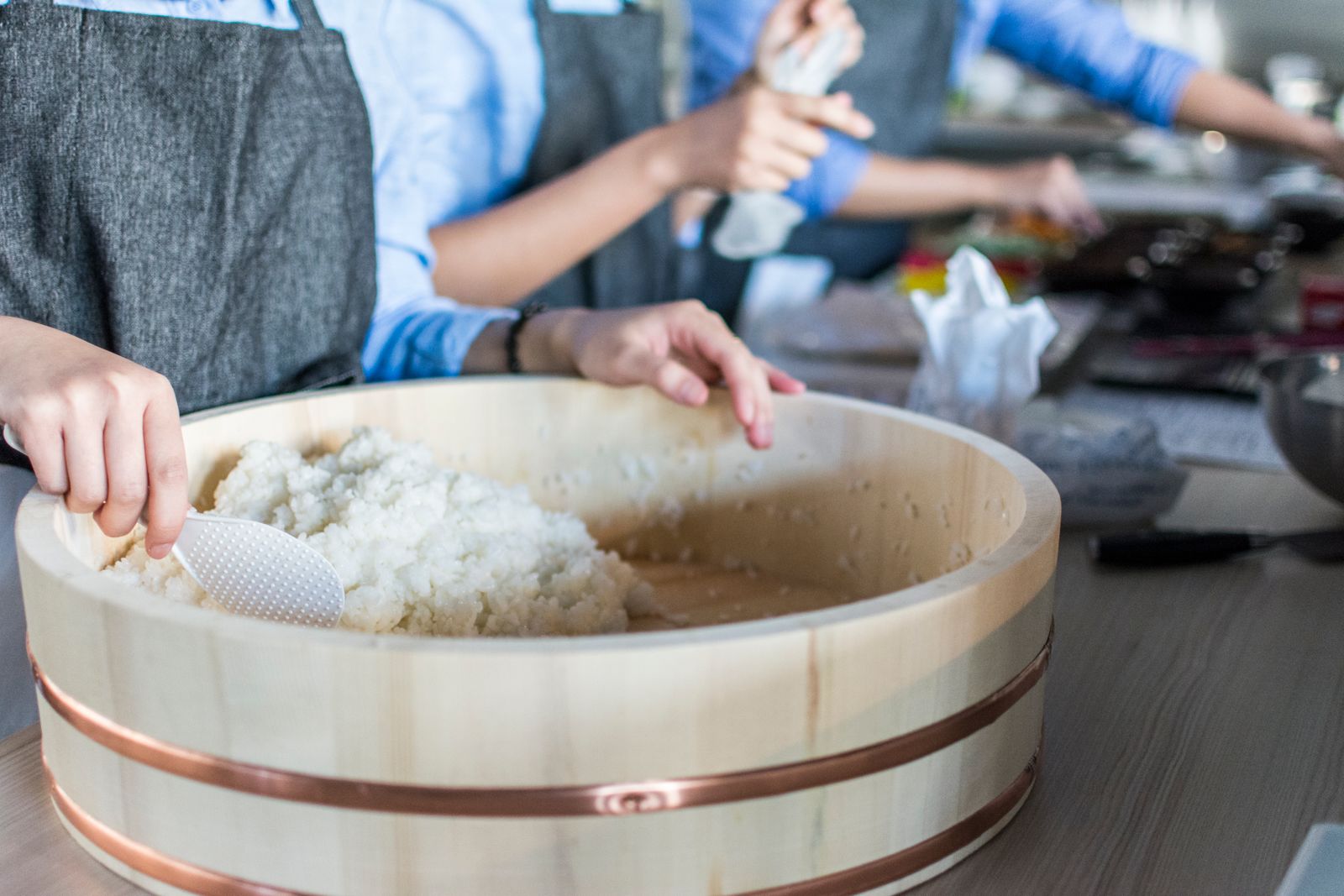
The rice is turned and fanned in a wide wooden tub called a hangiri, which soaks up extra moisture and helps each grain take the seasoning evenly.
Why temperature matters
Cold rice turns firm and dull, and it hides the taste of the fish. Rice at about body temperature stays loose, so a piece of nigiri almost falls apart in your mouth. That is why we keep the rice in a warm, covered tub at the counter and never in the fridge.
It is also why we ask you to eat nigiri soon after it is placed in front of you.
Rolls and bento
Rolls use the same rice, pressed a little more firmly so they can be cut cleanly. Bento rice is seasoned the same way and packed just before lunch service, from 11:30.