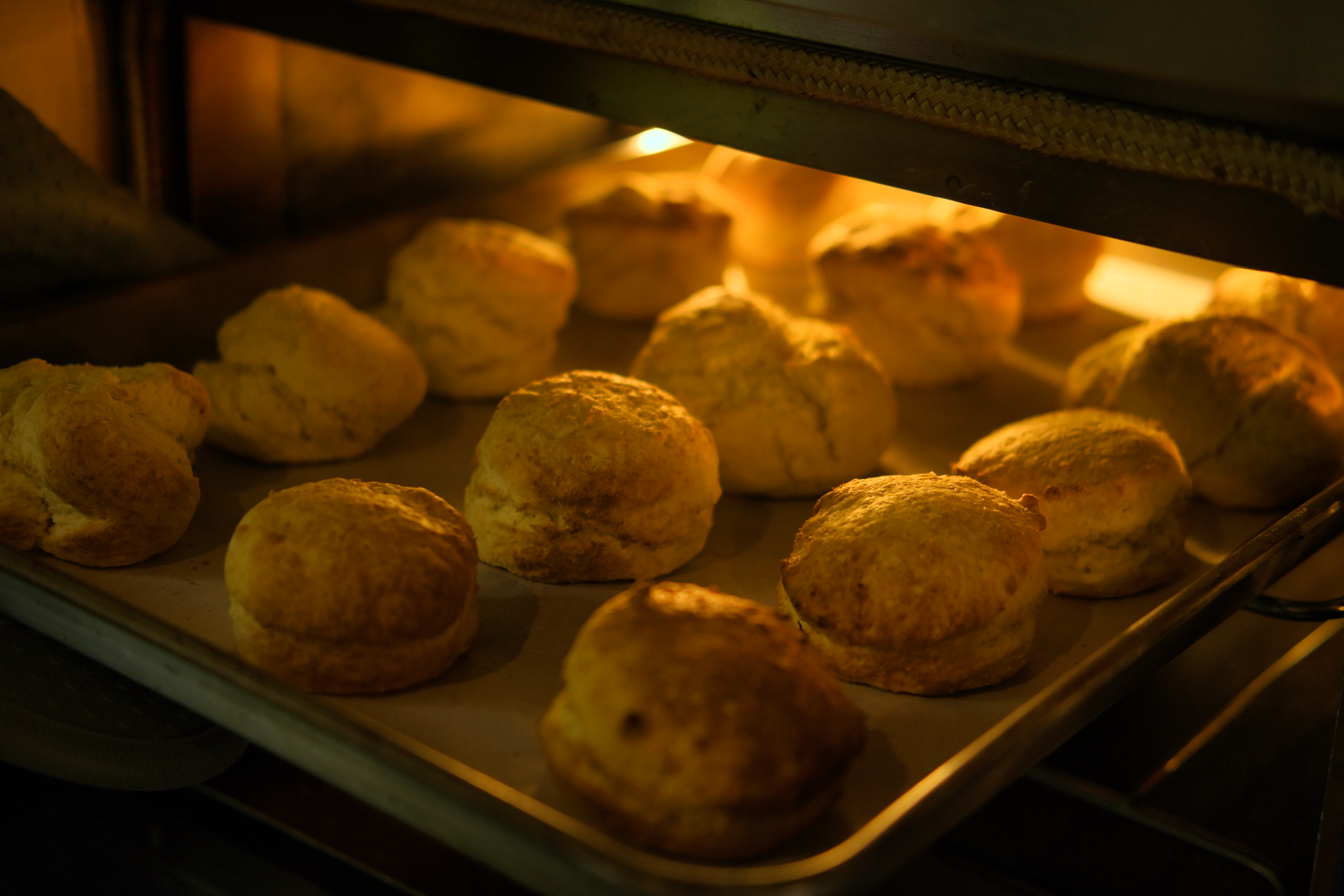
Ask our guests about their favourite part of afternoon tea and most will say the scones. That is no accident: a scone is a short-lived thing, and we organise the whole pastry kitchen around serving it at its best.
Small batches, all day
Our pastry chef, Mae Robinson, mixes the dough in the morning and keeps it chilled in portions. Each batch goes into the oven forty minutes before a sitting, so the scones reach the table about ten minutes after they come out, still warm in the middle.
Baking in small batches means a few more trays to wash. It also means no scone on your plate has been sitting under a cloth since breakfast.
The recipe
We use cold butter rubbed into flour by hand, buttermilk from a dairy in South Georgia and a little sugar. The dough is folded once, never kneaded, and cut straight down without twisting the cutter, which lets the scones rise tall and split neatly along the middle.
Our fruit scones use golden raisins soaked in Earl Grey tea, which gives them a faint citrus note.
Gluten-aware scones are baked on a separate tray from a blend of rice and oat flours. They are a little more crumbly, so we bake them last and bring them to the table straight from the oven, wrapped in a warm napkin.
What goes on top
Every scone comes with clotted cream, strawberry jam and our lemon curd. The jam is made in small batches from berries grown near Statesboro when they are in season.
Taking them home
Scones freeze well for a month. Warm a frozen scone in a 350°F oven for eight minutes and it comes back almost as good as fresh. Our tea shop sells a box of six for $15 on Saturdays.