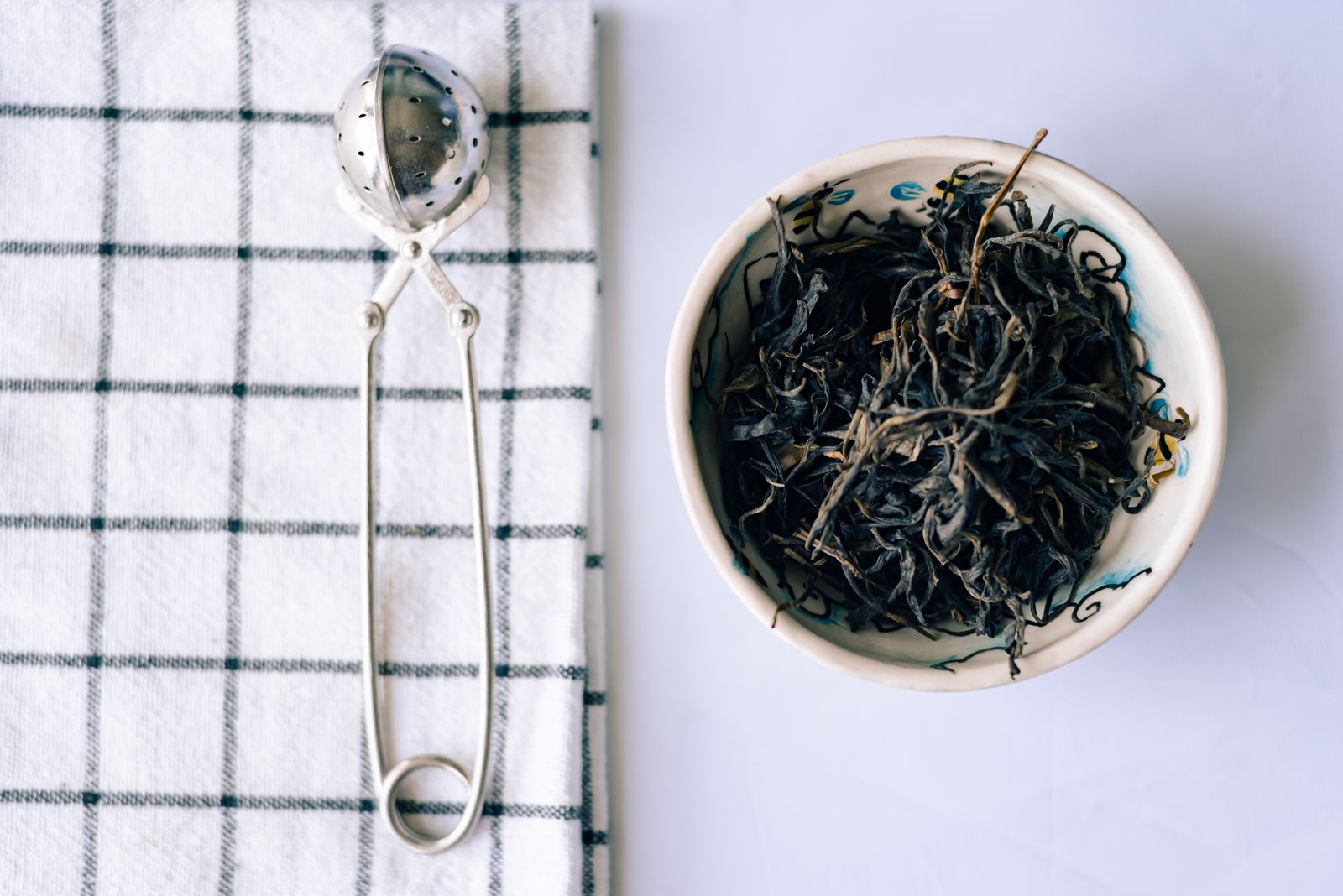
If green tea and black tea are two ends of a road, oolong covers almost everything in between. That is why it confuses people, and why we love pouring it for guests who think they do not like tea.
What makes a tea an oolong
All true tea comes from the same plant. What changes is how the picked leaves are handled. Green tea is heated soon after picking to stop the leaves from oxidising, while black tea is allowed to oxidise fully.
Oolong is oxidised part of the way, anywhere from about a tenth to more than half, and is often rolled and roasted as well. Each choice changes the taste of the cup.
Light and floral
Lightly oxidised oolongs, usually rolled into tight green balls, taste of orchids, lilac and fresh cream. Our milk oolong is one of these, and it has a soft, buttery finish without any milk added at all.
Watch the leaves as they steep: the small rolled balls slowly open into whole leaves, sometimes with the stem still attached. Many guests ask for a glass pot just to see it happen, and we keep a few on the shelf for that reason.
Dark and roasted
More oxidised and roasted oolongs turn amber in the cup and taste of toasted nuts, honey and stone fruit. Our roasted tieguanyin is charcoal-roasted in small batches and is wonderful with the chocolate pots on the top tier.
How to brew it
Use water at about 195°F and steep for three minutes. Do not throw the leaves away: a good oolong can be steeped three or four times, and the second and third pots are often the best. Ask for a refill of hot water at the table at no charge.