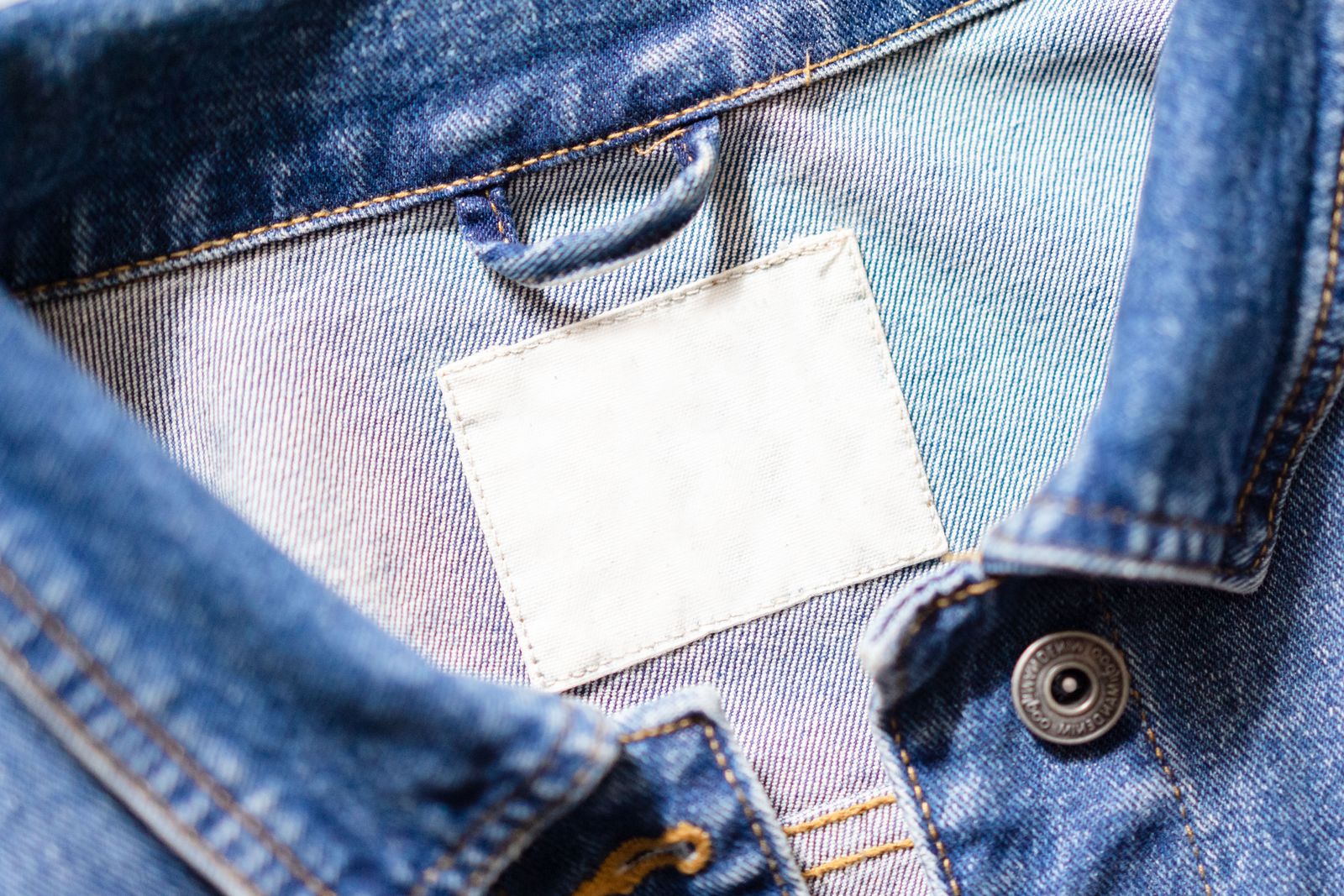
Customers often bring a dress or a jacket to the counter and ask how old it is. Without a dated receipt nobody can be certain, but the label, the zipper and the seams usually narrow it down to a decade. These are the clues our vintage buyer checks first.
The label
Older garments often carry a separate union label from a garment workers’ union, sewn near the brand label. The design of these labels changed over the decades, and collectors use them as a rough guide to dating American-made clothing.
Care labels with washing instructions became standard in the United States in the early 1970s, so a piece with no care label at all is often older. A label printed with a website address is, of course, much newer.
The zipper
Metal zippers were standard on dresses and skirts until the 1960s, often set into the side seam of a dress rather than the back. Nylon zippers became common through the 1960s and 1970s.
Look at the pull too. Many zippers carry the maker’s name stamped on the pull or the slider, which can help with dating if you look it up.
Seams and finishing
Before home and factory overlockers became common, seams were often pinked with zigzag shears, bound with tape or left raw. An overlocked seam with neat looping thread suggests a later piece.
Hand-finished hems, hand-sewn buttonholes and generous seam allowances that could be let out are all signs of older, carefully made clothing.
Putting it together
No single clue is proof. A label can be moved, a zipper replaced and a seam redone by a later owner. We look at all of them together, along with the fabric and the cut, and we write our best estimate on the tag as a decade, never a single year.
If you want a second opinion on a piece from your own closet, bring it on a weekday afternoon. We are always happy to look.