Brake pads wear a little every time you stop, so the question is not whether they will need replacing but when. Most pads last between 30,000 and 60,000 miles; city driving and heavy loads wear them faster than highway miles.
The four signs
A high-pitched squeal when you brake is often the wear indicator: a small metal tab that touches the rotor when the pad gets thin. It is designed to annoy you, and it works.
Grinding is more serious. It usually means the pad material is gone and metal is touching metal, which damages the rotors and turns a pad job into a pad and rotor job.
If the car pulls to one side when you brake, a caliper may be sticking. And if the pedal feels soft or goes further down than it used to, have the fluid and lines checked the same week.
What we check
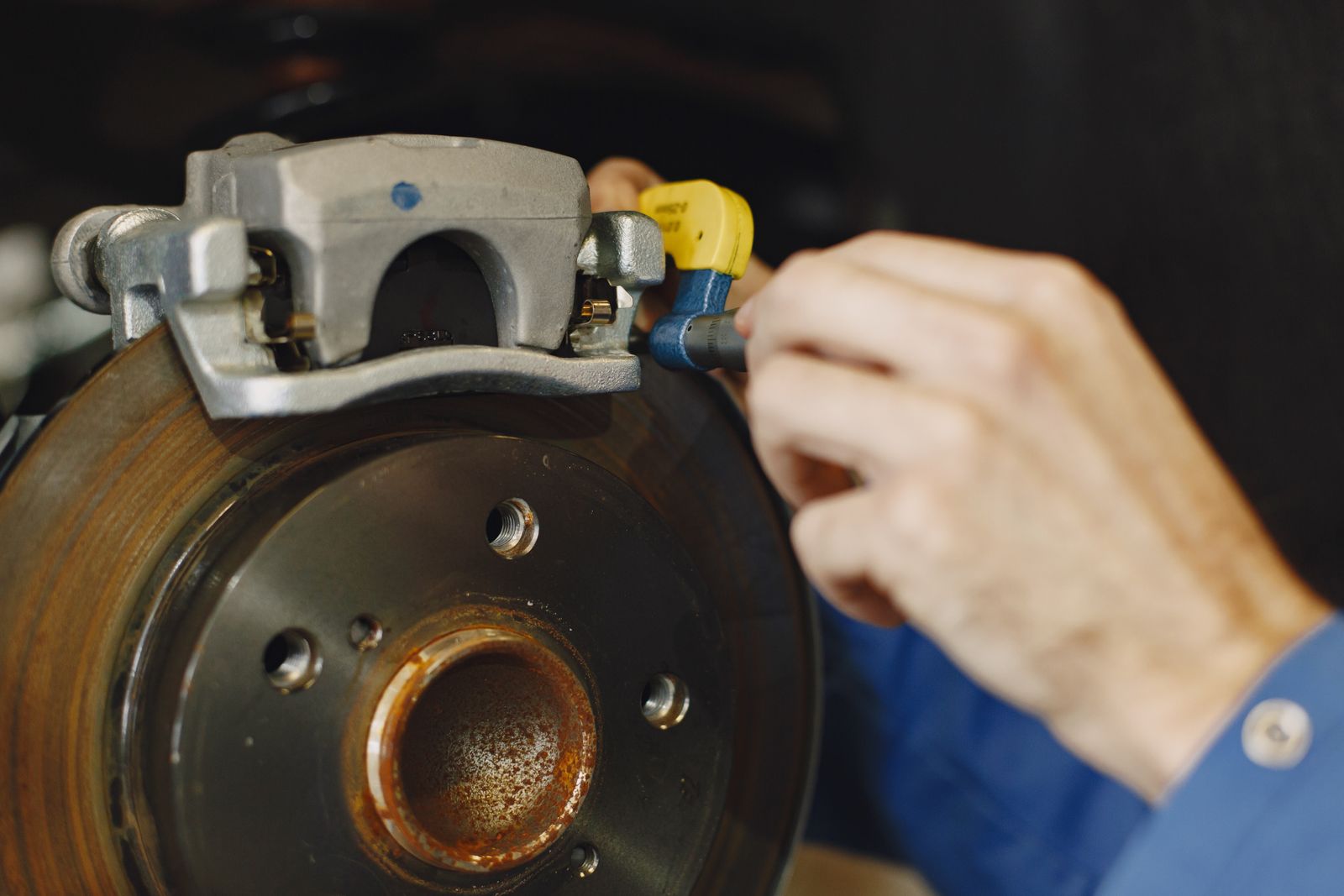
On every brake inspection we measure pad thickness at all four wheels, check the rotors for scoring and thickness, look at the calipers and slide pins, and test the brake fluid for moisture.
You get photos of each wheel and a written price before we replace anything.
What it costs
Front pads with new hardware start at $189 at our shop. If the rotors are below the minimum thickness, pads and rotors together start at $349 per axle. Rear brakes cost a little less on most cars.
Brake fluid should be changed every two to three years, whatever the mileage: it absorbs water from the air, which lowers its boiling point.