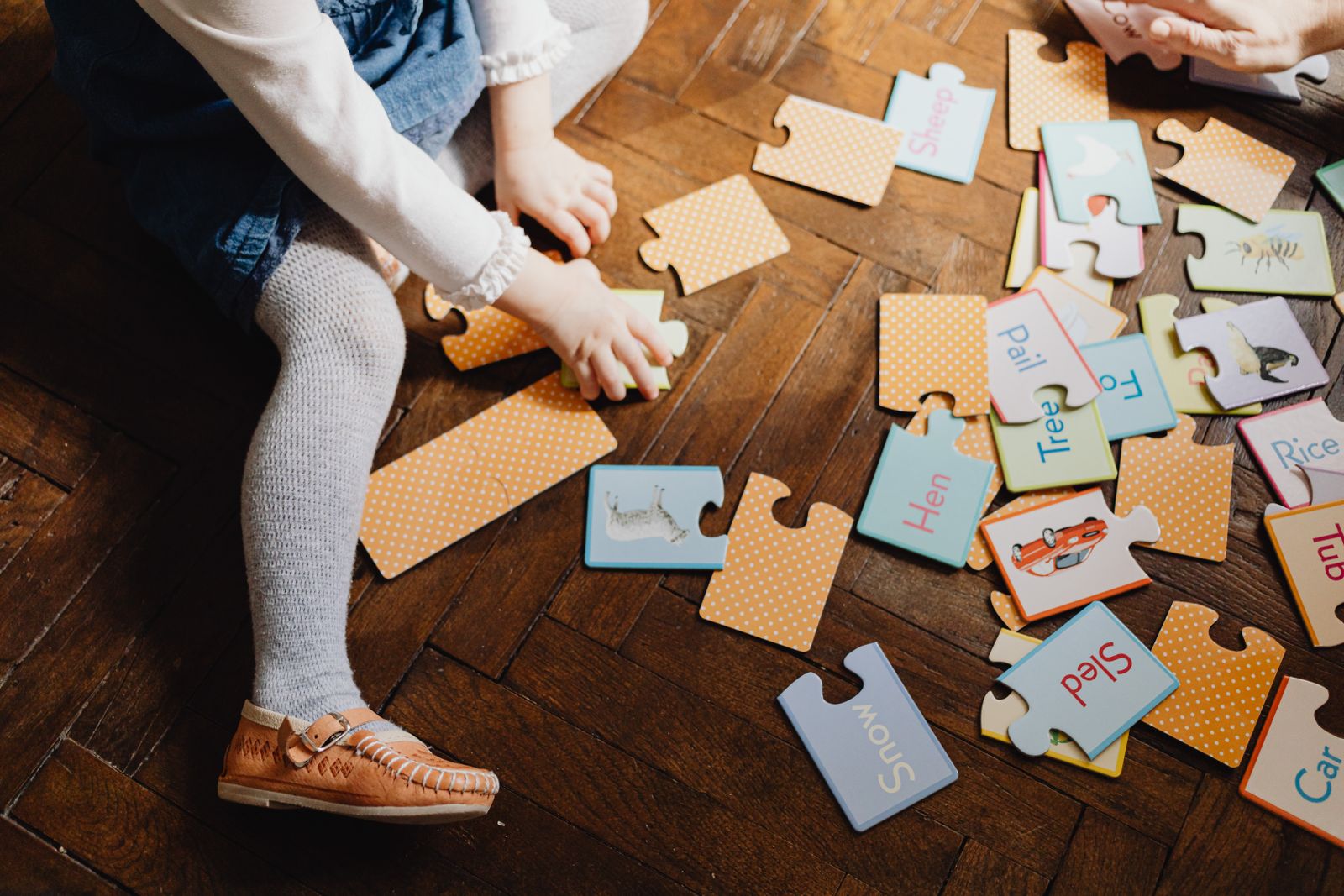
The number on a puzzle box is the first thing people ask about, and it does matter. A puzzle that is too easy is finished in minutes. One that is too hard ends up back in the box with half the edge done. Here is the rough guide we use at the counter.
Toddlers: knobs and big shapes
From around eighteen months, wooden puzzles with knobs and four to six separate shapes are perfect. By two and a half, many children manage simple jigsaws of four to twelve large pieces, especially when each piece is a whole animal or object.
Preschool: 12 to 48 pieces
Between three and five, puzzles of twelve to forty-eight pieces are a good range. Floor puzzles with big, thick pieces help small hands, and a picture with clear areas of colour makes sorting easier.
School age: 60 to 300 pieces
From five to eight, most children move through sixty, one hundred and then two hundred pieces. By nine or ten, a confident puzzler can tackle three hundred, especially with a picture they care about, like a map, a busy harbour or a favourite animal.
Why the picture matters
A 500-piece puzzle with a clear lighthouse and boats is easier than a 300-piece puzzle of blue sky and sea. Distinct colours, details and edges give the brain more to work with.
If you are buying for a child who loves puzzles, go a step up in pieces with an easy picture, or stay at the same count with a harder one. We keep open sample puzzles on the play table so you can see the size of the pieces before you choose.
Sorting edges first, then colours, into small trays or lids is a skill worth teaching. It turns a big puzzle into a set of small ones, which is often what keeps a seven-year-old at the table.