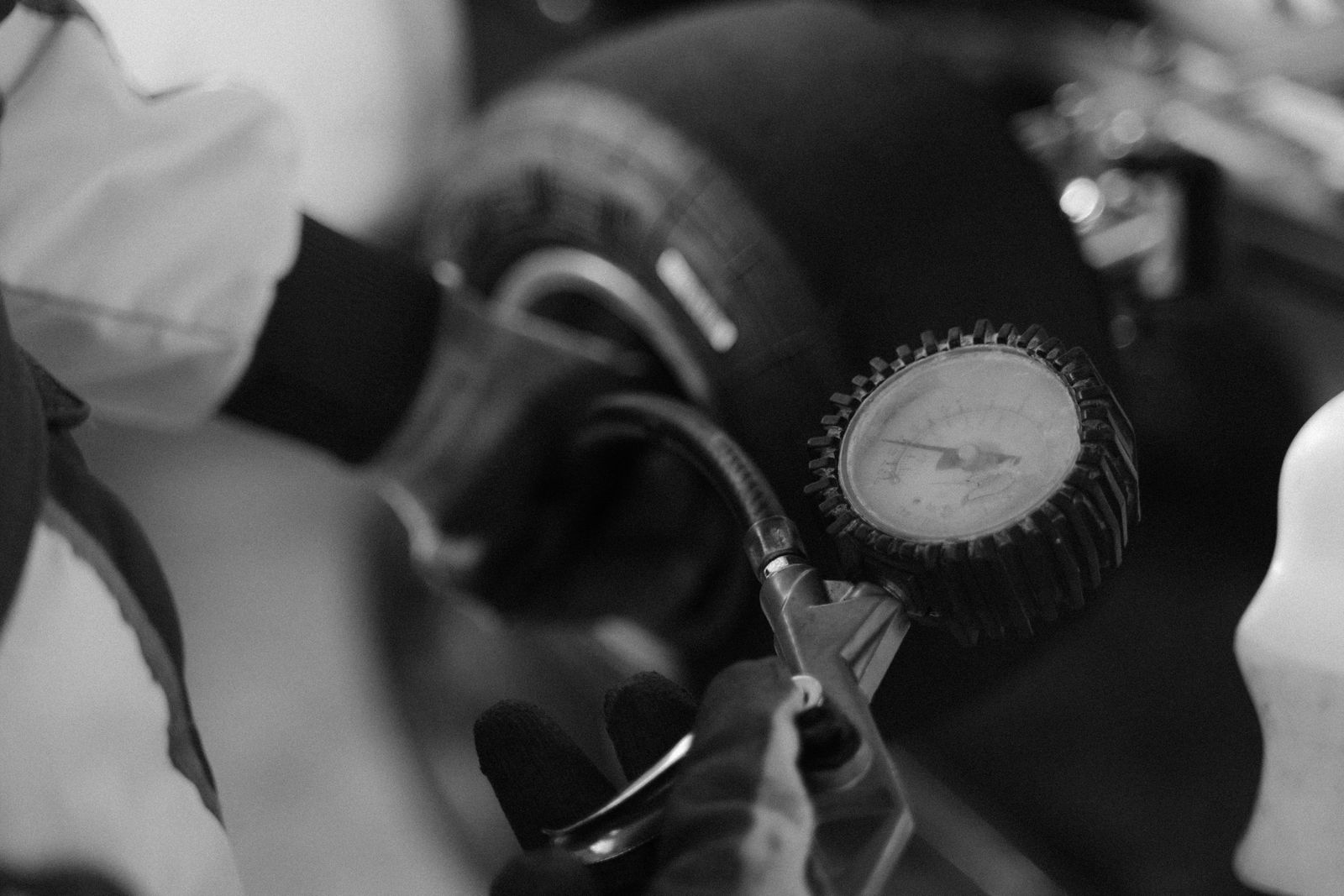
Every fall we see a wave of drivers with a tire-pressure warning light on. Most of the time nothing is wrong with the tires: the air inside them simply got colder. Pressure falls about one psi for every 10 °F drop in temperature, so a set filled on a warm September afternoon can be four or five psi low on a frosty October morning.
Use the number on the door
The right pressure for your car is on the sticker inside the driver’s door frame, not the number moulded into the tire sidewall. The sidewall number is the maximum the tire can hold, not what your car needs.
Check the pressure cold, before you drive or after the car has sat for three hours. Driving warms the tires and gives a reading that looks higher than it is.
Does altitude matter?
Tire gauges measure the pressure above the outside air. Driving from Denver up to a mountain pass at 11,000 feet raises the reading by a couple of psi, and driving back down lowers it again. For everyday driving the change is small; the door sticker number still applies at home.
If you fill up in the mountains, check again once you are back in the city.
Why it matters
Low pressure makes the sidewalls flex more, which builds heat, wears the outer edges and costs fuel. It also makes the car slower to respond in an emergency lane change. Too much pressure shrinks the contact patch and reduces grip on wet roads.
Free checks
Drive into our lane at any time we are open and we check and set all four tires, plus the spare if it is easy to reach. It takes five minutes and costs nothing.