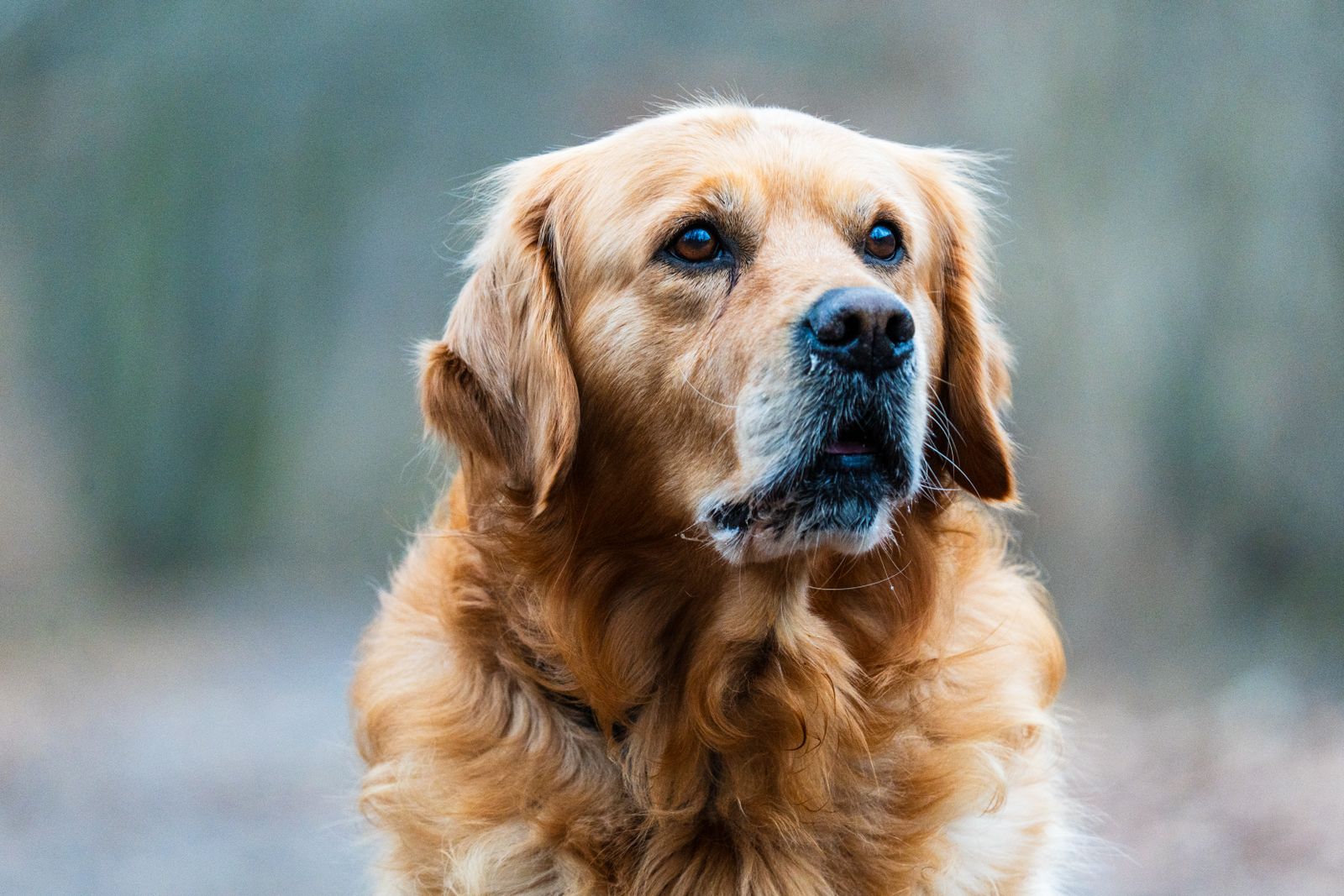
In colder places, double-coated dogs blow their undercoat twice a year, in spring and autumn. In Tampa Bay, with long summers, air conditioning inside and humid heat outside, many dogs shed a little almost every week. If your sofa tells you the same story, you are not alone.
Which dogs shed most
Breeds with a dense undercoat shed the most: huskies, German shepherds, golden and Labrador retrievers, corgis, Australian shepherds and Pomeranians. Short-coated breeds such as beagles and pugs shed too, in smaller hairs that weave into fabric.
Single-coated breeds like poodles and many doodles lose less hair, but their coats tangle and mat instead, which needs regular brushing of its own.
What a de-shedding groom does
We bathe with a de-shedding shampoo and conditioner that loosens the undercoat, then use a high-velocity dryer to push the loose fur out while the coat dries. Undercoat rakes and slicker brushes lift out what is left.
A large retriever can lose a full bag of fur in one session. Most double-coated dogs do well with a de-shedding groom every six to eight weeks, and every four weeks in the heaviest months.
Brushing at home
Between visits, brush two or three times a week with a slicker brush and an undercoat rake. Work in short sections from the skin outward, and finish with a comb to check you reached the bottom of the coat.
Keep sessions short and end on a good note. Five calm minutes every other day removes more fur than one long tug of war at the weekend.
When shedding looks different
Bald patches, red or flaky skin, constant scratching or shedding that suddenly gets much heavier are worth a vet visit. We point out anything unusual we see during the groom, but we do not diagnose skin problems.
Ask your vet about your pet’s health.