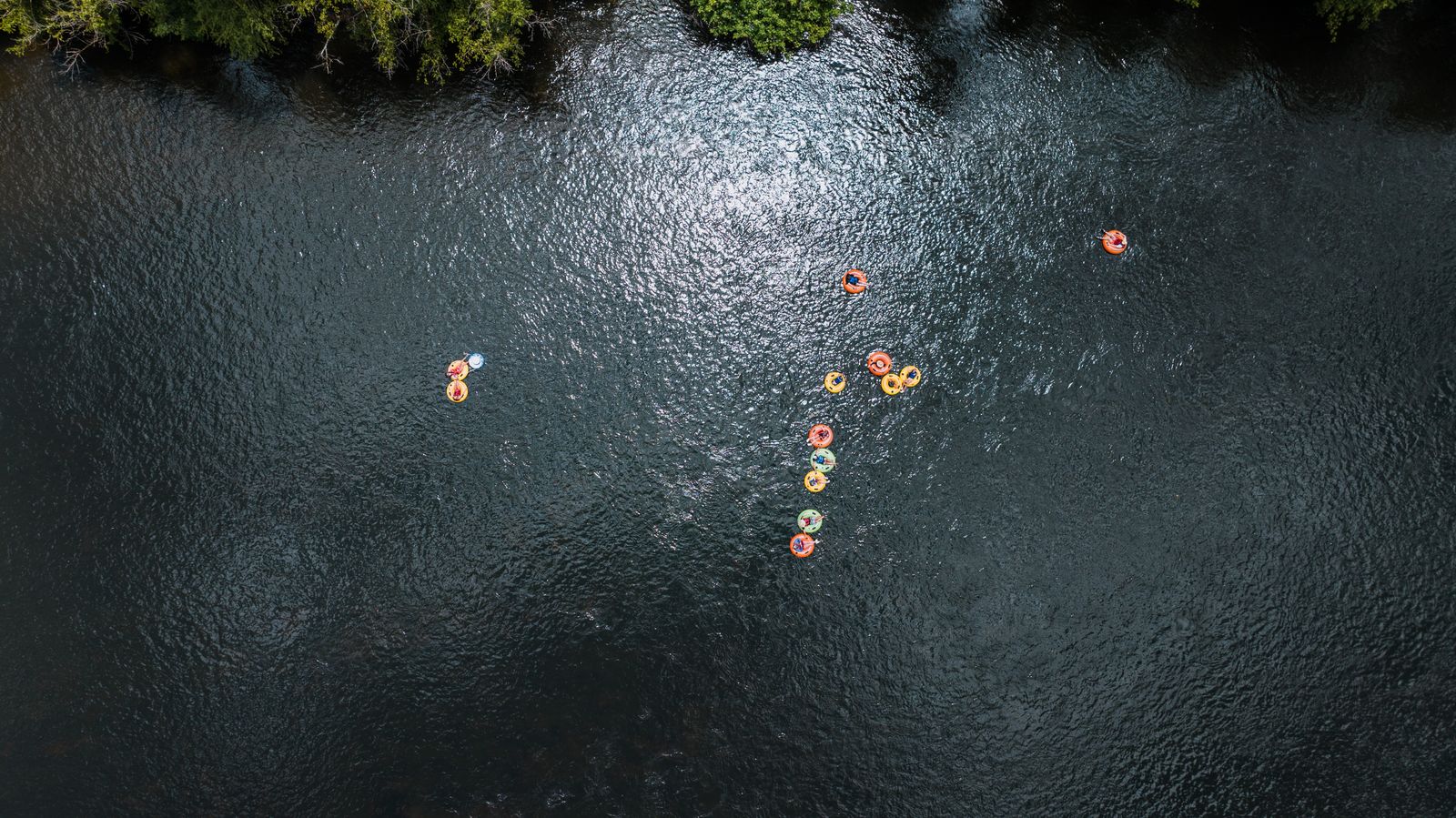
On a hot July afternoon, half the camp ends up in the river. The stretch below camp is slow and wide in summer, and floating it in a tube or paddling a kayak is one of the best ways to spend a day here. It is still a real river, though, with cold water and a current that changes with the season.
Check the water first
River flow and temperature change through the year. In spring the snowmelt makes the water fast and very cold, and we do not recommend floating until the flow drops, usually by late June.
Every morning in summer, Luis writes the river conditions on the board outside the office. If the board says no floating today, please take it seriously.
Wear a life jacket
Everyone on the water wears a life jacket, adults and children, strong swimmers included. We lend them free from the gear shed in children’s and adult sizes; just sign them out at the office.
Tie nothing to yourself and never tie tubes together into a raft. If you fall in, float on your back with your feet pointing downstream and steer towards the bank.
Know where to stop
Our camp beach is the place to start. Agree on a take-out point before you set off and know what it looks like from the water. Downstream there are stretches no one should float, and conditions can change after a storm or a release from the dams upstream.
We are not a river outfitter and we do not run guided floats. Dana can give you the phone numbers of licensed local guides if you would like one.
Leave the river as you found it
Pack out cans and wrappers, keep glass off the water and respect the private land along the banks. Children should always float with an adult close by.