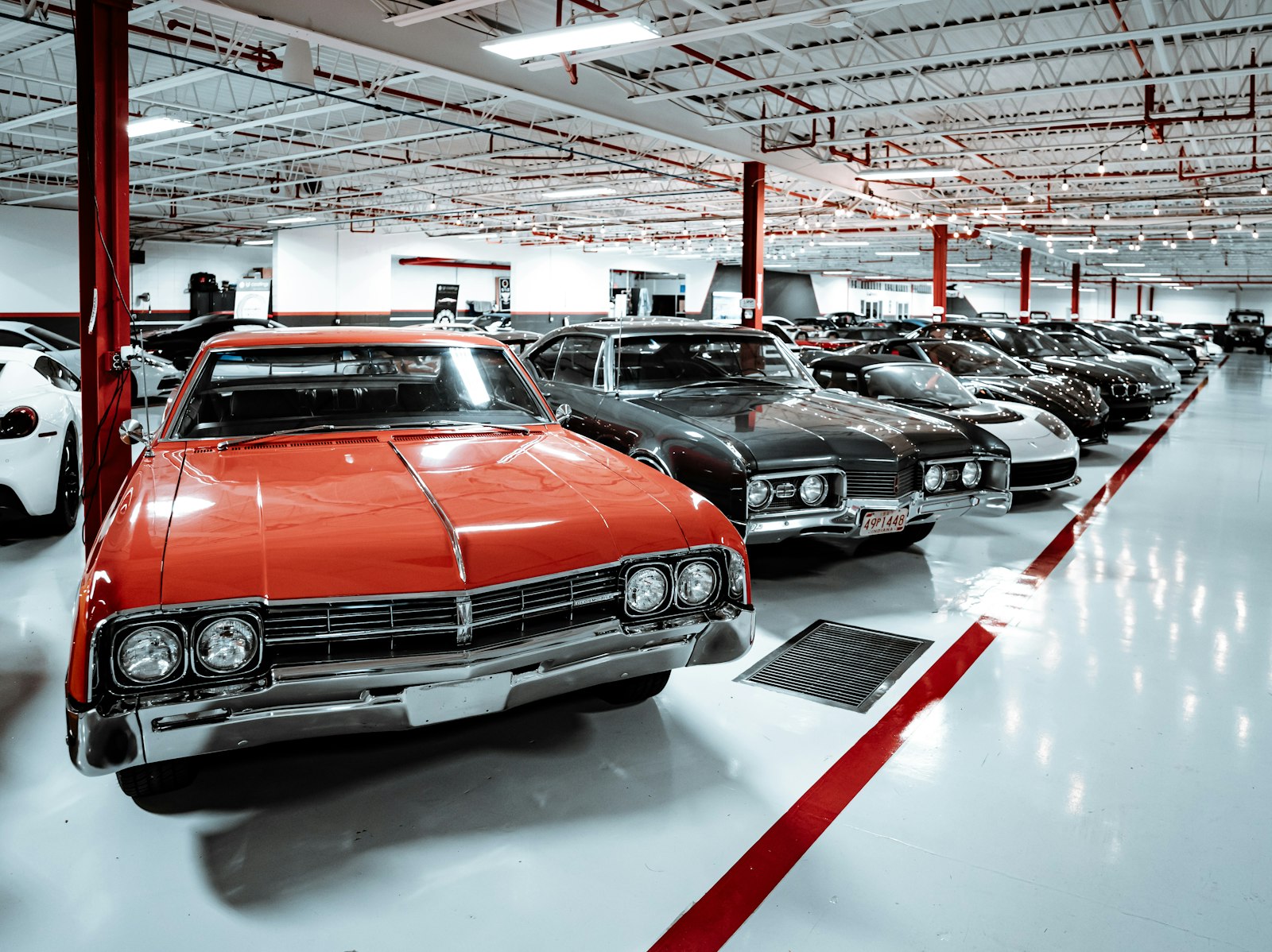
Salt season in Kalamazoo runs from November to April, and most classic cars sit for all of it. Done well, a winter lay-up is the easiest maintenance a car will get all year. Done badly, it costs a fuel system, a battery and a set of tires.
Fuel and oil
Fill the tank to about nine-tenths and add a fuel stabiliser, then drive a few miles so treated fuel reaches the carburettor. A full tank leaves less room for condensation.
Change the oil and filter before storage, not after. Used oil carries acids from combustion that sit on the bearings all winter.
Battery and tires
Either remove the battery and keep it indoors on a maintainer, or leave it in with a maintainer connected. A flat battery that freezes is a dead battery.
Inflate the tires to the maximum pressure on the sidewall to limit flat spots, or put the car on stands if it will sit longer than six months.
Keep the weather and the mice out
Wash and dry the car completely, including the underside, before it goes under a breathable cover. Never use a plastic tarp; it traps moisture against the paint.
Mice love classic cars. Put steel wool in the tailpipe, with a tag on the steering wheel to remind you in spring, and keep food and nesting material out of the garage.
In April, check the fluids, look under the car for drips, pump the brakes a few times and let the engine idle to full temperature before the first drive. Take that first drive gently: brakes and tires need a few miles to wake up.
Or let us do it
Our Coach House storage club keeps cars in a heated, insured building from November to April, with a battery maintainer, a monthly check and a spring start-up with fresh fluids and a hand wash.