Every restoration estimate we write starts with one question: does the body come off? The answer changes the hours, the budget and the finished car, so it is worth understanding before you talk to any shop.
What body-off means
On a body-on-frame car, such as most American cars and trucks before the 1980s, the body is unbolted and lifted from the chassis. The frame is blasted, repaired and painted on its own, and the body goes onto a rotisserie so we can reach every seam underneath.
It is the only way to see and fix rust between the body mounts and the frame, and it is what judges expect at a national concours.
When body-on is enough
A solid, dry car that will be driven rather than judged often does not need it. We can repair the floors, rockers and quarters with the body in place, refinish the underside in sections and rebuild the suspension one corner at a time.
On a typical full-size car, staying body-on saves 300 to 500 hours. That is real money you can spend on the engine, the interior or simply driving.
Unibody cars
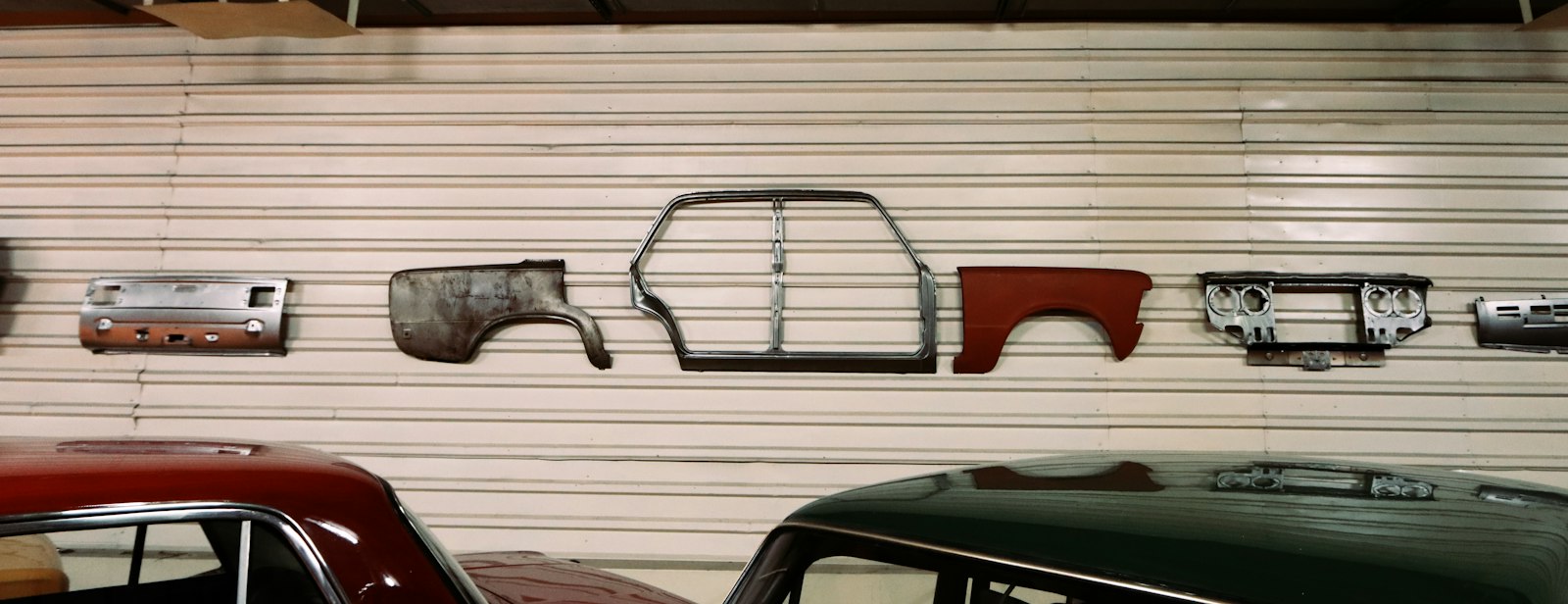
Mustangs, Camaros of the late sixties and most European cars have no separate frame; the body is the structure. For those we use a rotisserie or a jig, and the same choice becomes how far we strip the shell.
How we decide together
We look at three things: how much rust is hidden at the mounts, what you want the car to be, and the budget. A concours goal points to body-off. A weekend driver with a dry frame usually does not. Our written assessment explains which way we would go and why, with the hours for each.