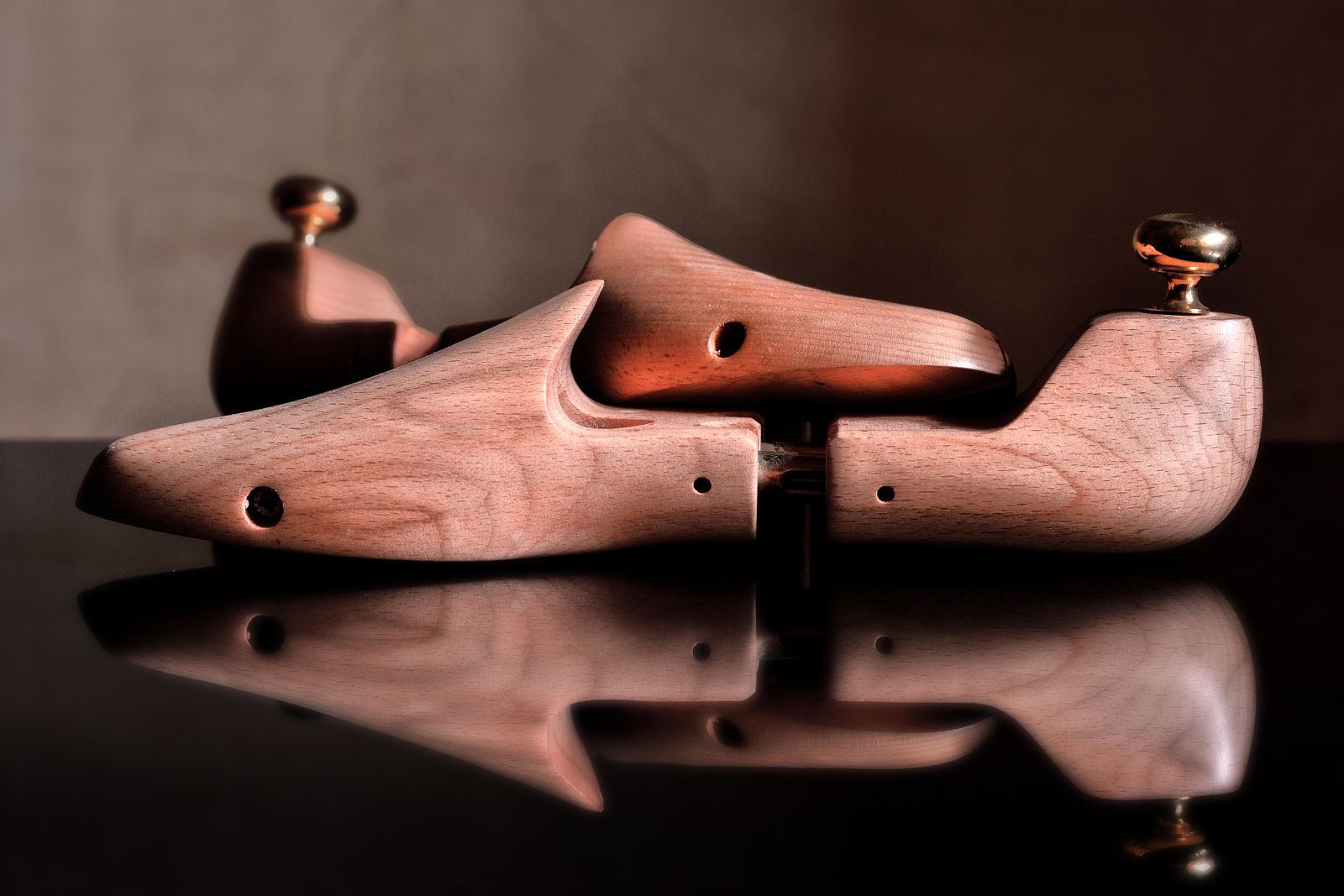
If there is one thing we would put in every closet, it is a pair of unvarnished cedar shoe trees. They are not glamorous, but they add years to good leather shoes.
Moisture is the enemy
Your feet release a surprising amount of moisture in a day, and most of it ends up in the lining and insole of your shoes. Raw cedar absorbs that moisture and lets it evaporate slowly, so the leather dries evenly from the inside instead of staying damp and stiffening.
Dry insoles also mean less odour. Cedar has a clean smell of its own, but the real benefit is that bacteria have less damp to live in.
Shape and creases
When you take a shoe off, the leather is warm and soft and the toe curls up along the flex line. A shoe tree pushes the vamp flat and the toe forward while the leather cools, so the creases stay shallow. Deep creases are where leather eventually cracks.
How to use them
Put the trees in as soon as you take the shoes off, while they are still warm. Choose a split-toe or spring model that fills the shoe without forcing it: you should feel light resistance, not strain. Leave them in for at least a few hours, overnight is ideal.
Do not use plastic or varnished trees for this job. They hold the shape but trap the moisture.
One pair per pair?
Ideally, yes, but if you rotate shoes, a set for each of the pairs you wear most is enough. We sell cedar shoe trees from $24 a pair at the counter, and we are happy to check the size against your shoes before you buy.