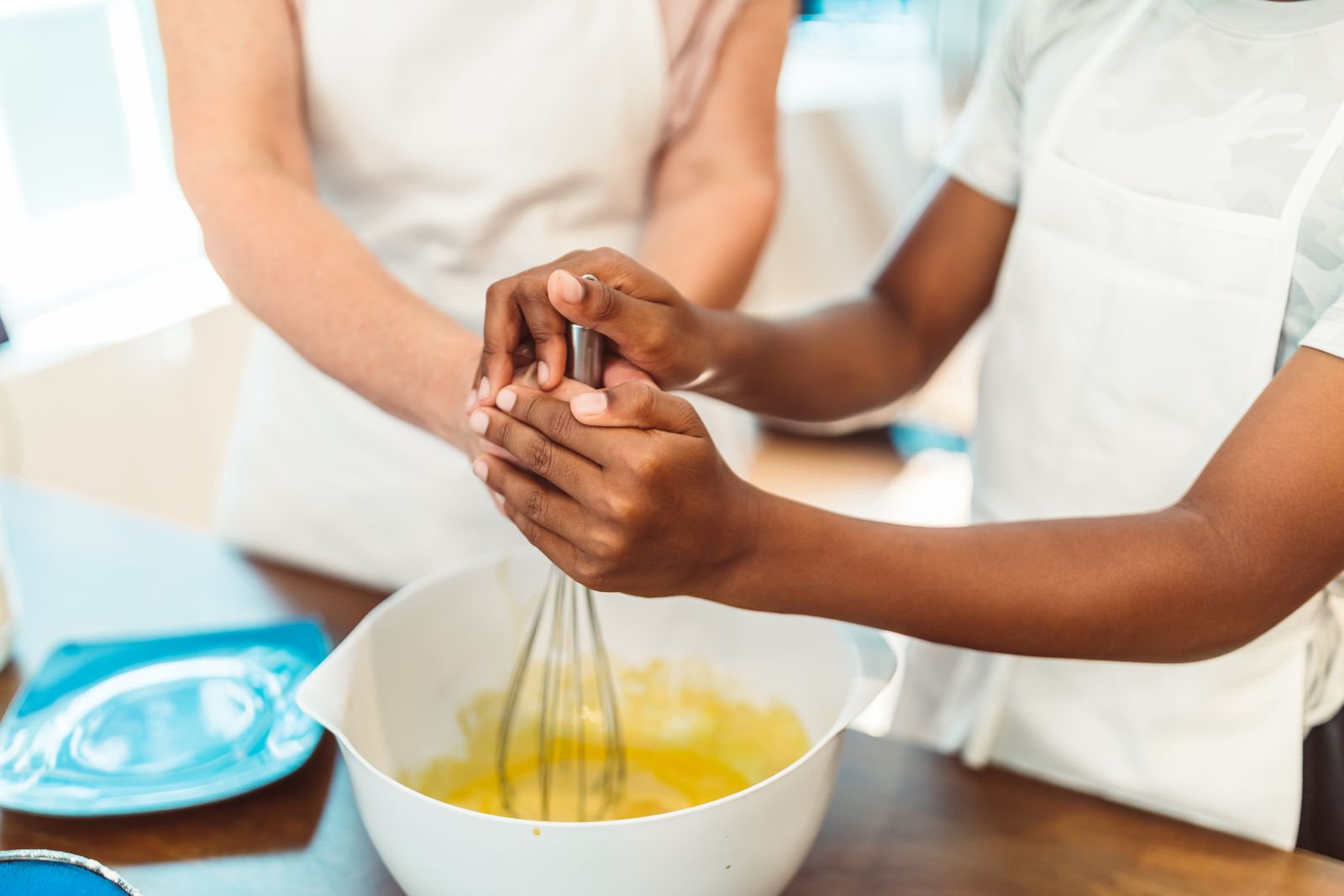
Children who cook are more willing to try what they made, and they are often more capable than adults expect. The trick is matching the job to the age, and staying next to them while they learn.
Ages 3 to 5
Washing vegetables, tearing lettuce and herbs, stirring cold batters, mashing bananas and pressing cookie cutters. Little hands love jobs with a clear finish line.
Set them up at a low table or on a steady stool with their own bowl and a towel. Expect spills, and treat them as part of the job rather than a mistake.
Ages 6 to 8
Measuring dry ingredients, cracking eggs into a separate bowl, kneading dough and cutting soft food such as cucumbers or strawberries with a small serrated knife. At our camps this is when children learn the claw grip.
Let them read the recipe aloud. It slows everyone down in a good way, and it turns a recipe into a reading lesson that nobody complains about.
Ages 9 to 12
Most children this age can use a proper chef’s knife with close supervision, follow a full recipe and cook simple dishes on the stove: scrambled eggs, pasta, quesadillas and pancakes.
Give them a whole dish to own from start to finish, including setting the table. The pride is worth the extra mess.
Keep it safe and calm
Tie back long hair, roll up sleeves and keep a step stool that is steady. Turn pan handles inward and agree on one rule: nobody walks behind the cook with something hot without saying so.
Our kids camps run in school breaks and every summer for ages 6 to 12, in groups of ten with two chefs, and every camper takes the recipes home.