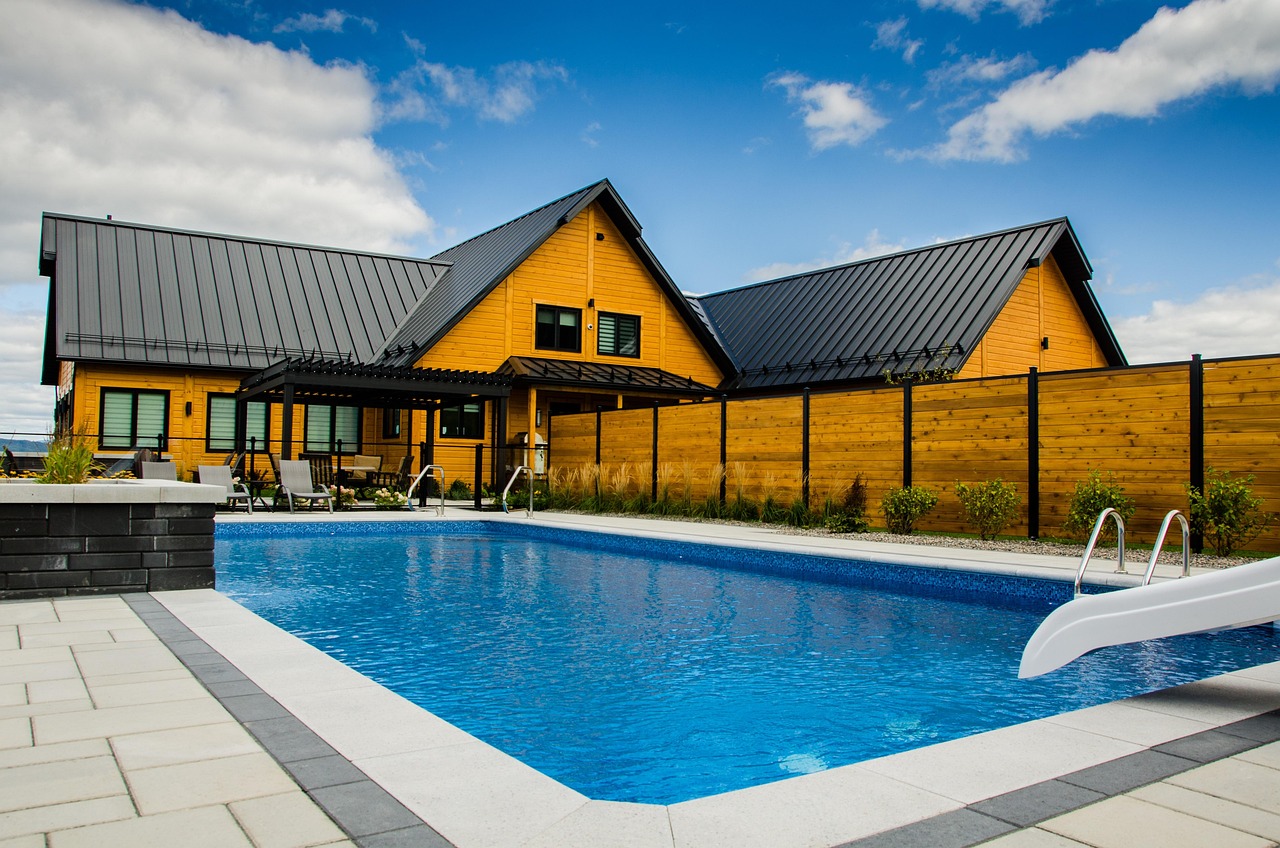
A pool fence has one job that matters more than looks: keeping small children out of the water when nobody is watching. Local codes and most insurance companies have rules about it, and an inspector will check them before the pool can be used.
Height and gaps
Many codes ask for a barrier at least four feet high, with gaps small enough that a child cannot squeeze through and no horizontal rails a child could use as a ladder. The exact numbers depend on your city or county, so we check the current rules for your address before we draw the fence.
Ornamental aluminum is a popular choice because the pickets are close together, it never rusts near pool water, and it keeps the view of the yard open.
The gate does the real work
Pool gates should open outward, away from the pool, and close and latch on their own every time. The latch usually sits high on the gate, out of a child’s reach, or on the pool side with a shield around it.
Self-closing hinges need adjusting now and then. Test the gate every month: open it fully, let go and make sure it closes and latches without help.
Around the edges
A barrier is only as good as its weakest point. Keep chairs, planters and the grill away from the outside of the fence, and check that the ground under the bottom rail has not washed out after heavy rain.
What a pool fence costs
A black aluminum pool fence starts at $44 a foot installed with us. A typical 140-foot backyard with one self-closing gate comes to between $5,600 and $8,200, depending on slope and the number of corners.