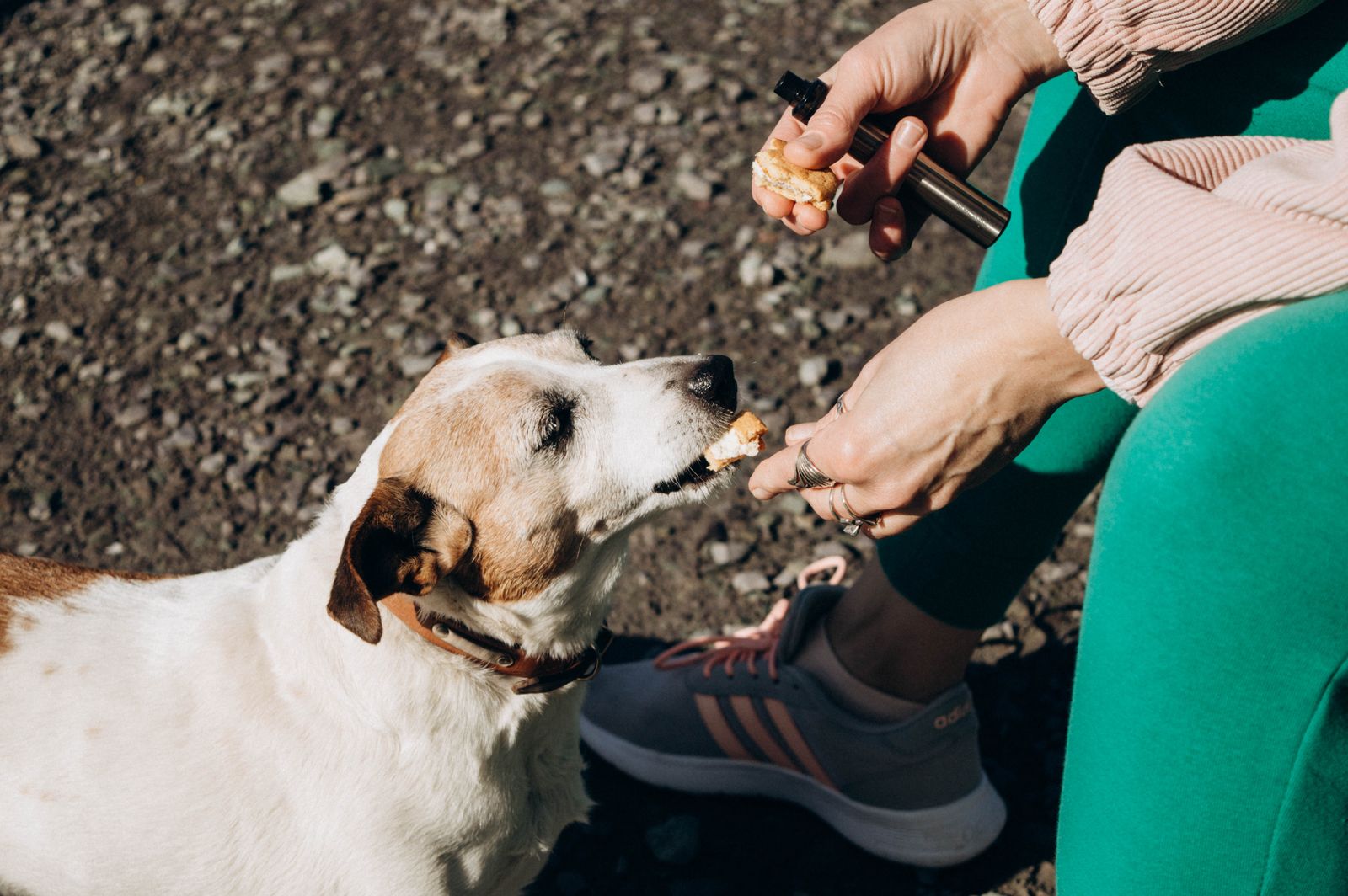
Reward-based training, also called positive reinforcement training, means teaching a dog by rewarding the behaviour you want so it happens more often. It sounds simple, and it is, but there is more to it than handing out biscuits.
Rewards are what your dog wants
A reward is anything your dog will work for in that moment. For many dogs it is food, but it can be a tug toy, a chance to sniff, a game of chase or getting to say hello to a friend. Part of our job is finding out what motivates your dog.
The value of a reward changes with the situation. Dry kibble might work in the kitchen and be ignored in the park, where a piece of chicken works better.
Markers make it clear
A marker is a short word such as “yes”, or the sound of a clicker, that tells your dog the exact moment they did the right thing. The reward follows the marker. Clear timing makes learning faster and less frustrating for both of you.
What we do instead of punishment
When a dog gets it wrong, we make the next attempt easier rather than adding a correction. We manage the situation so the unwanted behaviour cannot happen as often: a lead, a gate, more distance from a trigger.
We do not use prong, shock or choke collars in our classes. They can stop a behaviour in the moment, but they do not teach the dog what to do instead.
Does it work for every dog?
Every dog can learn with rewards. How fast they learn depends on age, history, health and how much practice happens at home, so we do not promise results by a date. We do promise a plan you can follow.