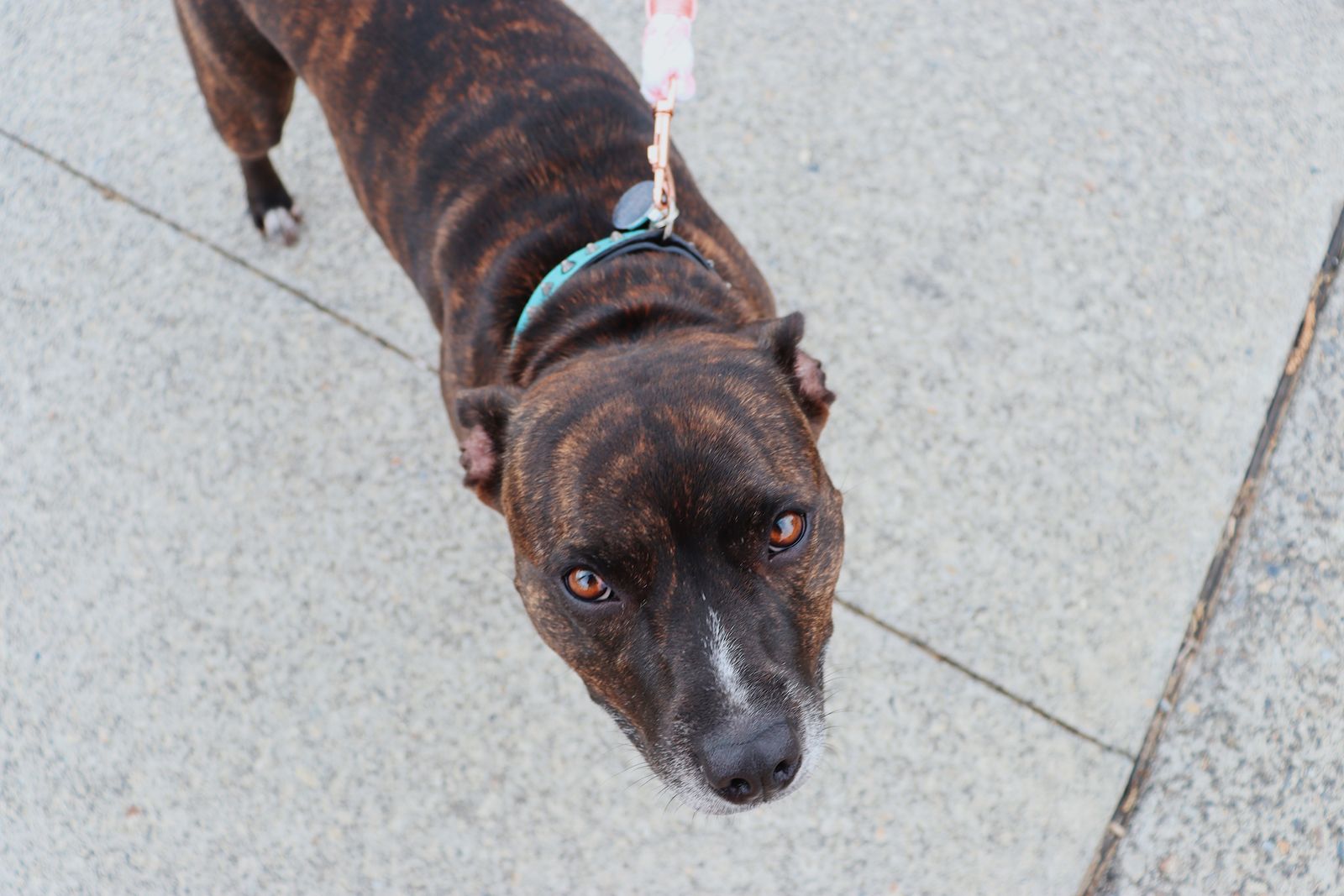
Pulling on the lead is the most common reason people call us. The good news is that loose-lead walking is a skill like any other, and five focused minutes a day do more than an hour of tug-of-war on a long walk.
Set up for success
Use a flat collar or a well-fitted harness and a six-foot lead. Retractable leads teach dogs that pulling makes the lead longer, which is the opposite of what you want. Carry small, soft treats in a pouch on the side you want your dog to walk.
Start indoors or in a quiet yard. The street is the final exam, not the first lesson.
The routine
Stand still with your dog beside you. Reward them for being there. Take one step, and if the lead stays loose, reward at your leg. Then two steps, then three. If the lead tightens, stop, wait for your dog to come back towards you, and reward the moment they do.
Change direction often so your dog learns to watch where you are going. Keep the sessions short and end on an easy success.
Taking it outside
When your dog can walk twenty steps indoors without pulling, try the same routine on a quiet street at a quiet time. Expect it to feel like starting over; distractions make everything harder.
On busy days, use a harness clipped at the front and simply keep walks short, so your dog does not practise pulling.
How long it takes
Most dogs in our basic obedience course make clear progress over six weeks with daily practice. Some take longer, especially young, strong or very curious dogs. Steady practice matters more than the length of each walk.