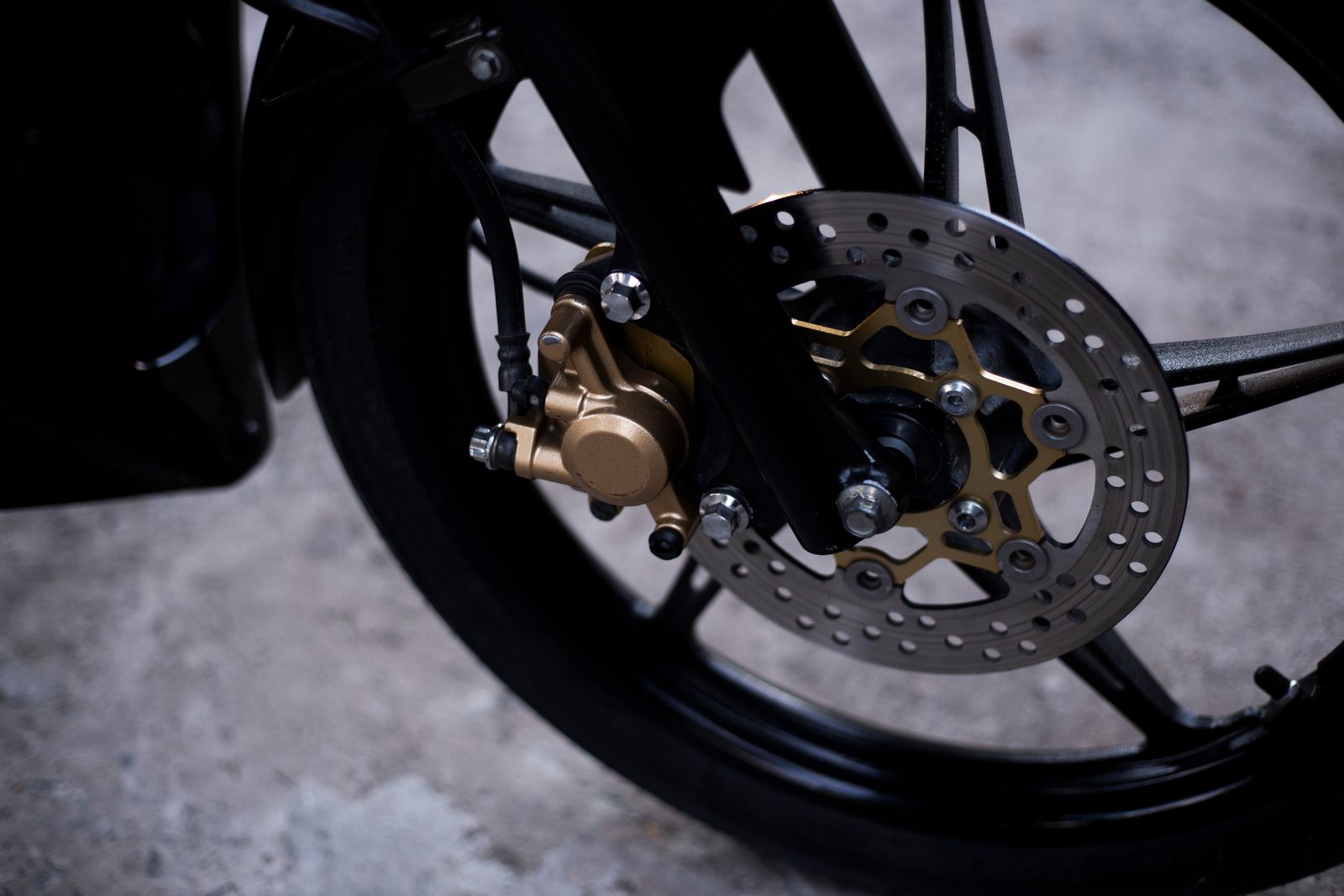
Motorcycle brakes are simple and very effective, which is why riders tend to forget about them until a lever feels wrong. A quick look every few weeks tells you most of what you need to know.
Read the pads
Shine a flashlight into the caliper from the front or the top and look at the pad material behind the metal backing plate. Many pads have a groove cut across them; when the groove is gone, the pads are close to the end. If you see less than about two millimetres of material, book new pads before your next long ride.
Front pads wear faster than rear pads on most bikes because they do most of the stopping. Cruiser riders who use a lot of rear brake are the exception.
Check the fluid
The small reservoir on the handlebar has a window or a translucent body. Fresh fluid is a light amber colour. Fluid that has turned dark brown has absorbed water from the air, which lowers its boiling point and lets the lever go soft after repeated hard stops. Most manufacturers ask for new fluid every two years.
Here on the coast, humidity makes that interval more important, not less.
Signs a caliper needs work
A wheel that drags when you push the bike, a lever that pulses, or pads that wear unevenly usually point to sticking caliper pistons. Road salt is rare in Florida, but sand and beach air do the same job over time. A caliper clean and rebuild brings them back.
What a brake service costs here
New pads start at $79 per caliper including cleaning the pins and checking the pistons. A brake fluid change for both ends is $89. We photograph the old pads next to the new ones so you can see what you paid for.