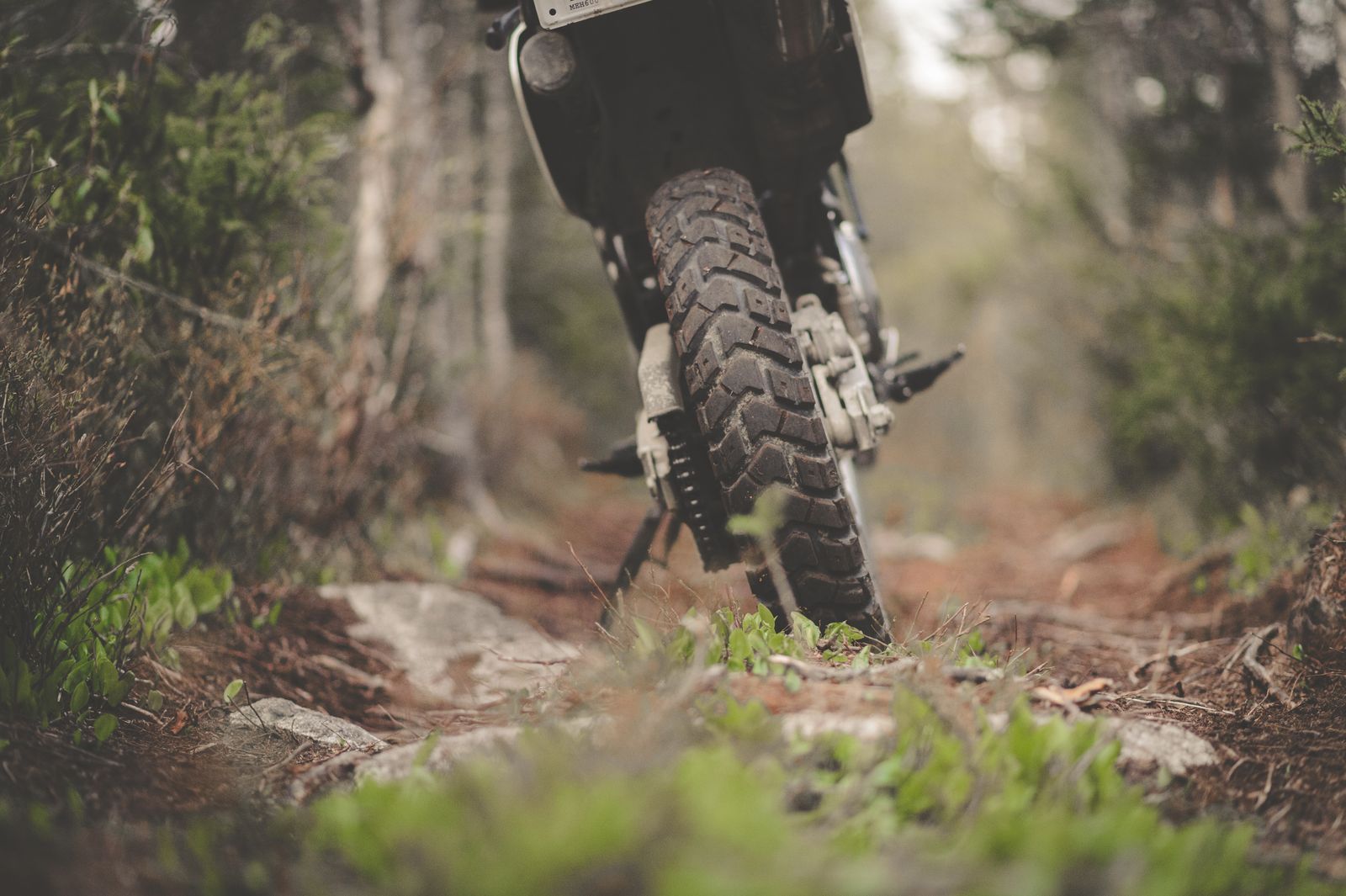
On a car, a tire that is a few psi low is an annoyance. On a motorcycle it changes how the bike turns, how it brakes and how warm the tire runs on a long highway stretch. Two contact patches the size of your palm are all that hold you to the road, so a five-minute check before a ride is time well spent.
Pressure, cold
Check pressure before you ride, not after, because a warm tire reads high. The right numbers are in the owner’s manual or on a sticker on the swingarm or chain guard, usually with one figure for solo riding and a higher one for a passenger or luggage.
Use your own gauge. Gas station gauges are often several psi out, and the difference between 36 and 40 psi on a rear tire is something you can feel in a corner.
Tread and shape
Most tires have small wear bars inside the grooves. When the tread is level with them, the tire is done. Look at the profile too: a flat strip down the middle of the rear tire is normal for riders who do a lot of straight highway miles, and it makes the bike feel heavy as it leans into a turn.
Age and damage
The four-digit date code on the sidewall shows the week and year the tire was made. Rubber hardens with age, so we suggest replacing a tire after five to six years even if the tread looks fine. Run a hand around the tire looking for cuts, bulges, nails and cracks in the sidewall.
When to bring it in
If you lose more than a couple of psi a week, find a nail, or see cords showing through, stop riding on that tire. A tire swap at our shop is $45 per wheel with the wheel off the bike, and we check the wheel bearings and valve stem while it is apart.