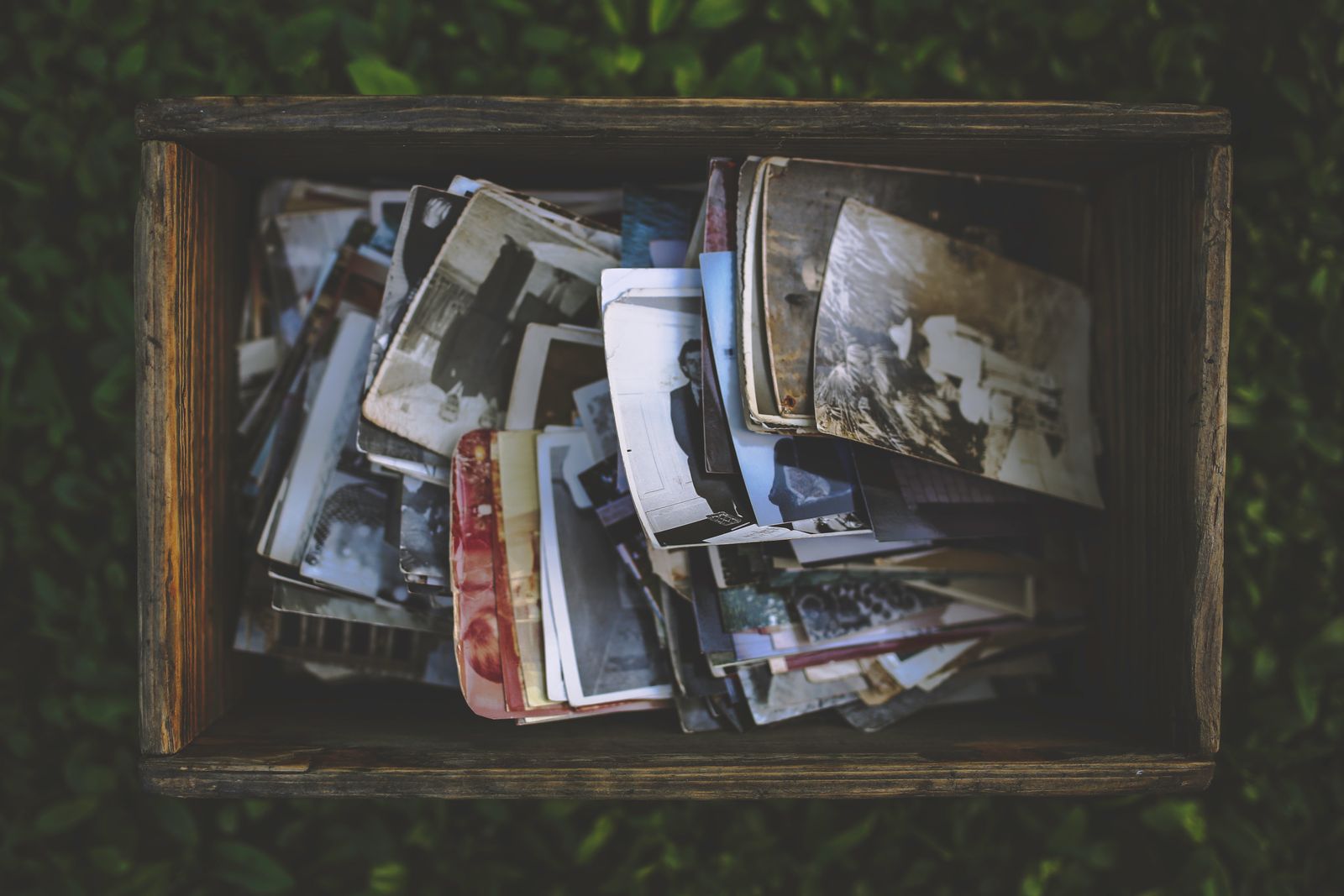
Every year island families lend us hundreds of photographs for our Gallery V exhibition. Some arrive in perfect condition after a century in a drawer; others have faded, curled or stuck to the plastic of a magnetic album. The difference is almost always how they were stored.
Keep them cool, dark and dry
The best place in most houses is an interior closet on the main floor. Attics bake in a Texas summer, garages and ground floors flood, and both swing between hot and damp in a way that cracks emulsion and grows mould.
Lose the magnetic album
Self-adhesive albums from the 1970s and 1980s slowly yellow and pull at prints. If a photograph lifts easily, move it to an acid-free sleeve. If it sticks, leave it in place and ask us; forcing it tears the image.
Archival boxes and sleeves cost a few dollars at most craft and office stores. Look for the words acid-free and lignin-free, and avoid anything that smells strongly of plastic.
Handle by the edges
Fingerprints leave oils that etch into a print over time. Wash and dry your hands, hold photographs by the edges, and never use tape, glue or paper clips on them.
Write names and dates on the back with a soft pencil, lightly, near the edge. A photograph without names loses most of its meaning within a generation.
Scan, then share
A good scan at 600 dots per inch protects the image if the print is ever lost. Keep the files in two places and share copies with relatives so that nobody needs to handle the original.
Our free photo clinic runs on the first Saturday of every month. Bring up to ten photographs and we will look at them with you.