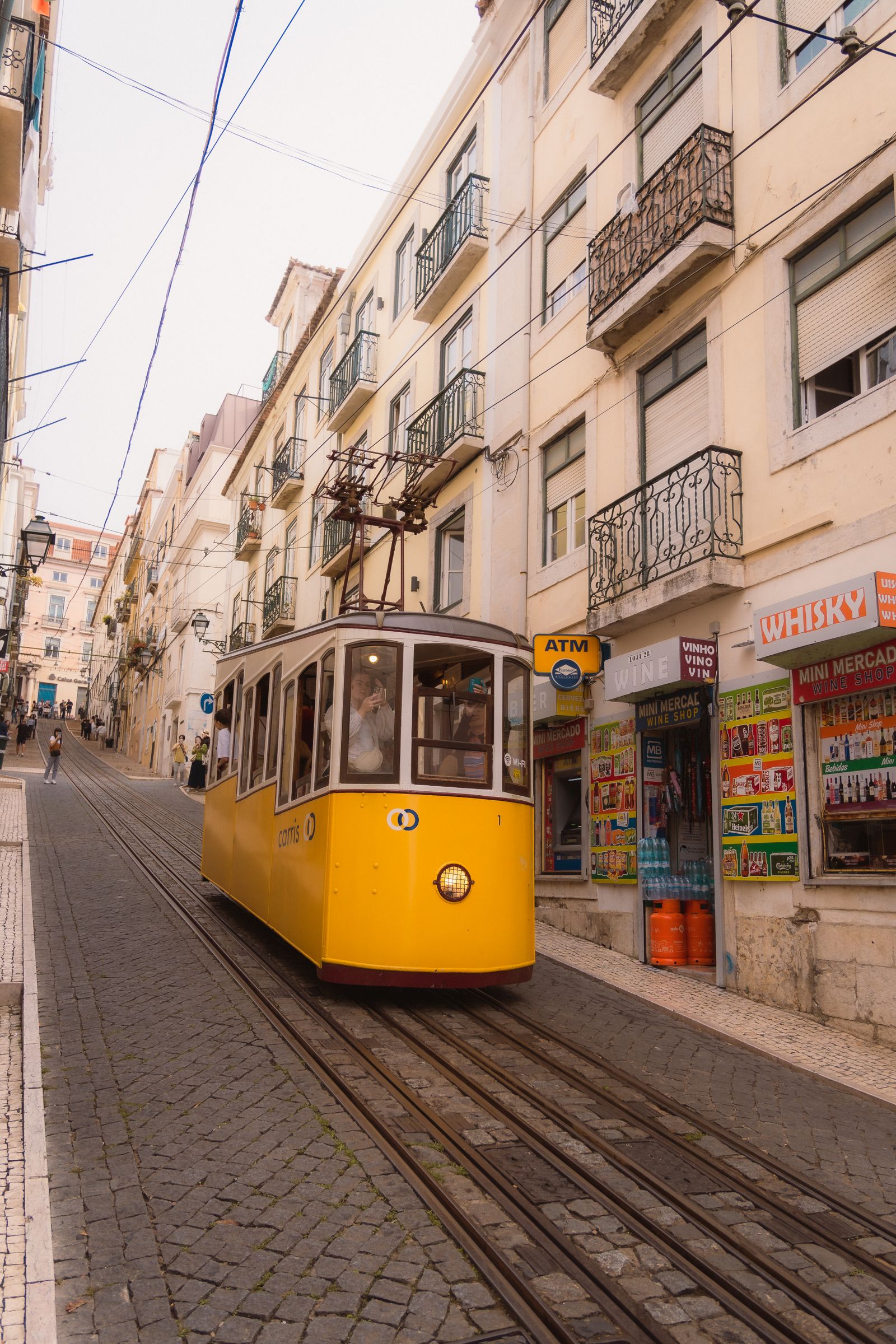
I arrived in Lisbon for a three-month stay with no Portuguese and a bad sense of direction. The map on my phone showed a tangle of streets folded over seven hills, and I could not make it mean anything. So I did the one thing that needs neither language nor direction: I got on a bus and stayed on it until it stopped for good.
I did this nearly every day for a month. Number 28 one morning, number 735 the next, whatever came first at the stop below my flat. At the end of the line I got off, drank a coffee, looked around and caught the same bus back.
What a bus route knows
A bus route is a city’s own idea of itself. It goes where people actually need to go, not where the guidebook thinks they should. It passes the hospital and the big supermarket and the secondary school. It waits outside the factory at shift change. It knows which hill is too steep, and goes around.
From the window I learned the order of things. Which neighbourhoods had laundry on every balcony and which had none. Where the shops changed from bakeries to phone repair to bakeries again. Which stops filled with schoolchildren at four and emptied of them at ten past.
Tourists ride to the famous places. Buses ride to everywhere else, and everywhere else is the city.
The ends of the line
The terminals were the best part. Nobody visits the end of a bus line on purpose. I found a café at one where three old men played cards in total silence for an hour. At another, a field of allotments with fig trees and a man who gave me a fig without a word, as if this happened every day.
By the second month I could read the map. The streets had become routes, and the routes had become a kind of grammar. I still did not speak much Portuguese, but I knew the city the way you know a sentence you have heard many times: not every word, but the shape of it, and where it goes next.