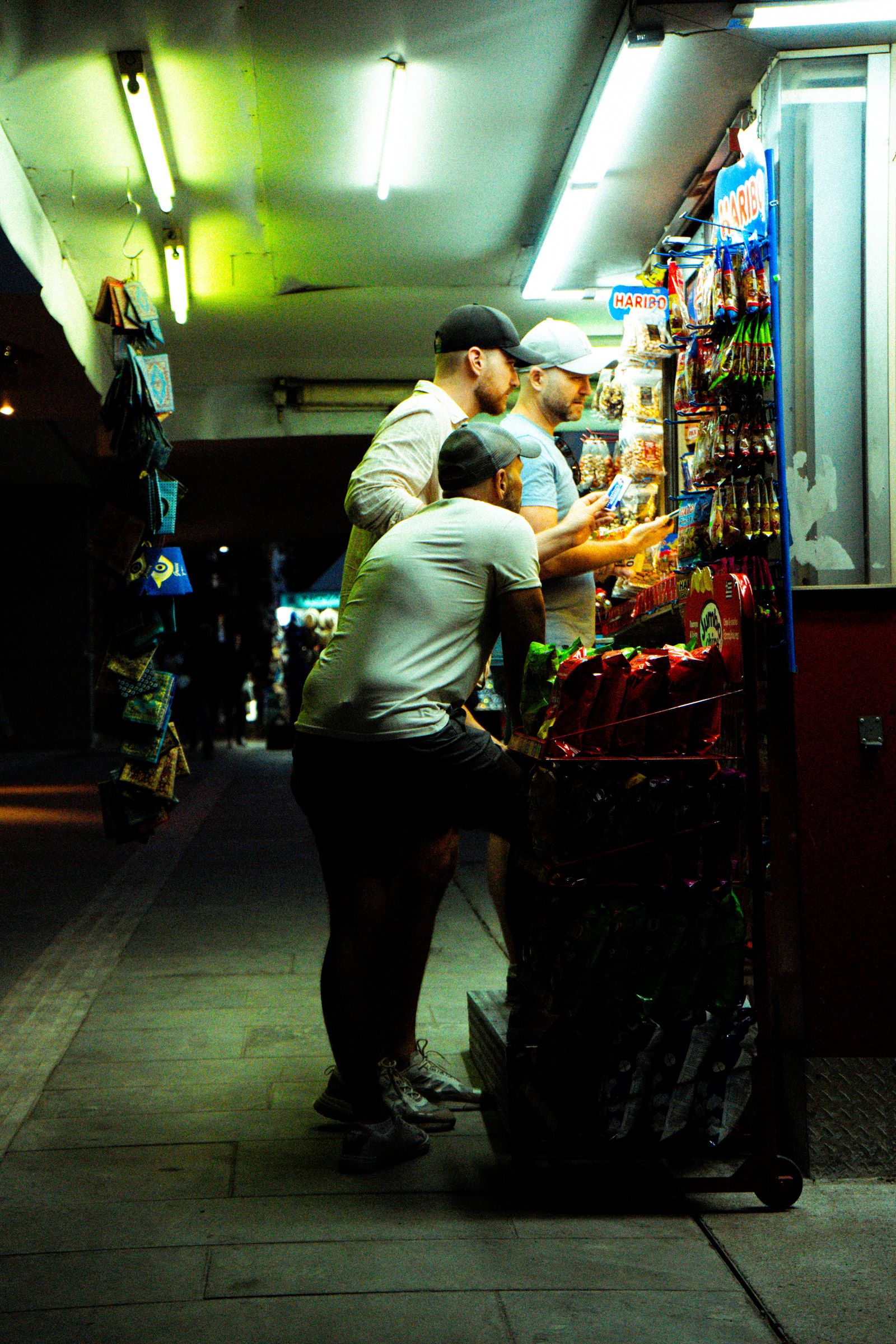
When I lived in Chicago, on a street of brick two-flats, the only light after ten was the corner shop. It sold milk, cigarettes, lottery tickets, phone cards, bus passes, onions in a net, and a single shelf of paperbacks that never changed.
I went there most nights at eleven. I told myself it was for milk. It was not always for milk.
The night shift
The man behind the counter was called Samir and he worked six nights a week. He watched football on a small screen with the sound off and greeted everyone the same way, with a nod and the price. In two years I do not think we exchanged more than a hundred sentences, and I remember most of them.
The shop at eleven had its regulars. A nurse coming off a late shift who bought the same chocolate bar every night. A teenager buying bread for his mother. A man in a suit, always slightly lost, who bought one can of soup and stood looking at the paperbacks for a long time before leaving without one.
At eleven at night a city is a small town again, and the corner shop is its square.
I think about that shop more than any museum I have visited. It was the one place in the neighbourhood that was the same for everyone. You could not be important at the counter. You could only be a person who needed milk, or soup, or a moment of light before going home.
When I moved away I went in to say goodbye. Samir nodded, said the price of the milk, and then, after a pause, said that he hoped the new place had a good shop. It was the longest thing he ever said to me. I hope so too.