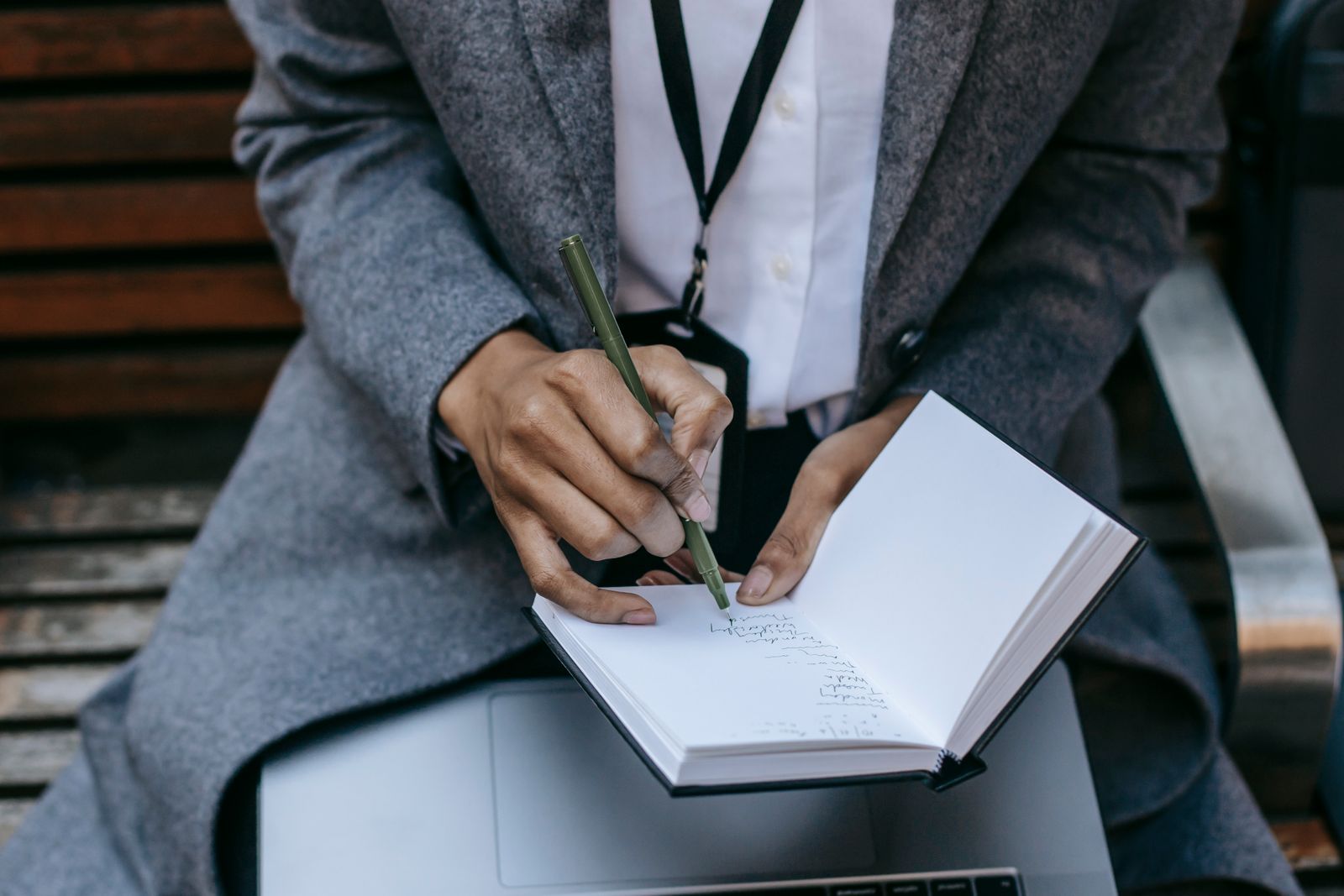
I carry a small notebook in my coat pocket. It is about the size of a playing card, with a soft cover and squared paper, and I fill one every six weeks or so. I have a shelf of them now, eighty-one at the last count, held together with rubber bands.
People sometimes ask what goes in it. The honest answer is: nothing important. That is exactly why it matters.
The rules
There are only three. Write it down now, not later, because later never comes. Write the exact words, not a summary. And write the small things, because the big things you will remember anyway.
What I collect
Overheard sentences, mostly. A woman at the bus stop saying “he was the kind of man who ironed his jeans”. A child explaining to her father that clouds are “just sky that got tired”. These are better than anything I could invent, and they vanish within the hour unless I catch them.
Prices, too. What a coffee cost in a station café, what a man paid for a single rose on a Tuesday. Prices fix a moment in time better than dates do. And colours, as exactly as I can manage: not “blue door” but “the blue of a swimming pool in a photograph from the eighties”.
A notebook is a net for the ordinary. The ordinary is where the essays live.
The notebook also changes how I walk through a day. Knowing it is in my pocket, I listen harder at the bus stop and look longer at shop windows. It is less a record of attention than a reason for it.
Almost everything I have written began as a line in one of these books. Not the idea, usually, but the detail that makes the idea feel true. When an essay goes flat, I take down a few old notebooks and read them on the floor. Something always turns up, waiting.