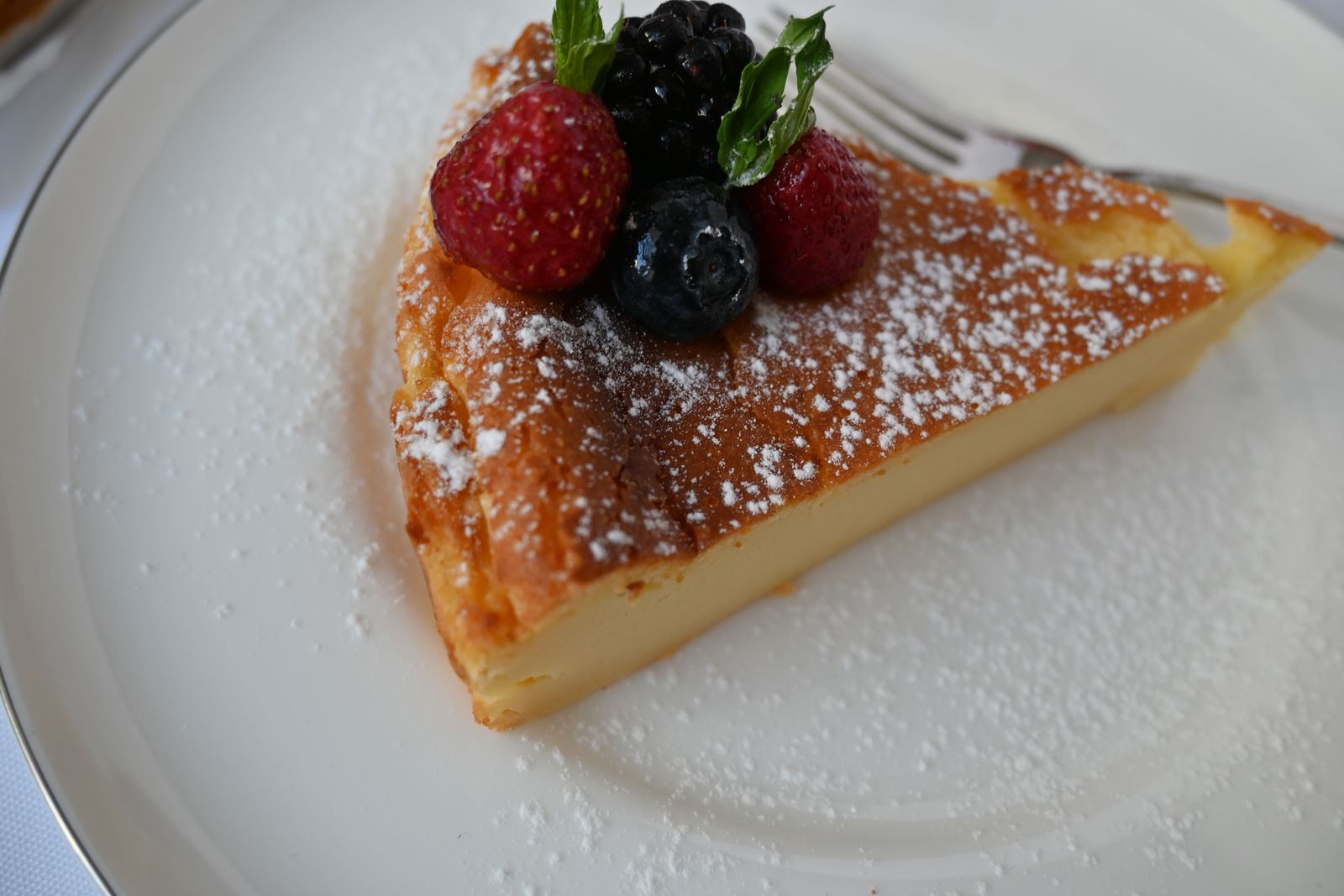
Visitors from outside Kentucky often stop at the pie board and point at one name: chess. It is the simplest pie we bake, made from things every farm kitchen already had in the pantry, and it is still our best seller after apple.
What goes into it
A chess pie is a sweet custard of butter, sugar and eggs, with a spoon of cornmeal and a splash of vinegar. It bakes into a filling that is dense and smooth underneath, with a thin, crackly sugar crust on top. There is no fruit and no spice.
Our recipe came from Ruth’s grandmother, who baked it on this farm in the 1950s. We still use the same proportions and the same cast-iron pie tins for the Sunday batch.
Where the name comes from
Nobody is quite sure. One story says it was kept in a pie chest, a ventilated cupboard, and the word wore down to chess. Another says a cook, asked what was in the oven, answered “jes’ pie”, and the drawl did the rest. We tell both stories at the stand and let you choose.
Chess pie through the year
The plain chess pie is on the board every day. In February we bake chocolate chess, with cocoa stirred into the custard, and in March a lemon chess with fresh zest and juice. All three slice cleanly and travel well in a car.
Because it is a custard pie, chess pie belongs in the fridge once it is cool. It keeps for up to four days, and many people think it tastes even better on the second day.
How to serve it
A thin slice is enough: chess pie is rich. We like it slightly cool with black coffee or a glass of cold milk. A spoon of whipped cream or a few sliced strawberries in May cut the sweetness nicely.
Chess pie is one of the five pies in our holiday pie box. If you have never tried it, a slice at the counter costs five dollars, and most people order a whole pie on their way out.