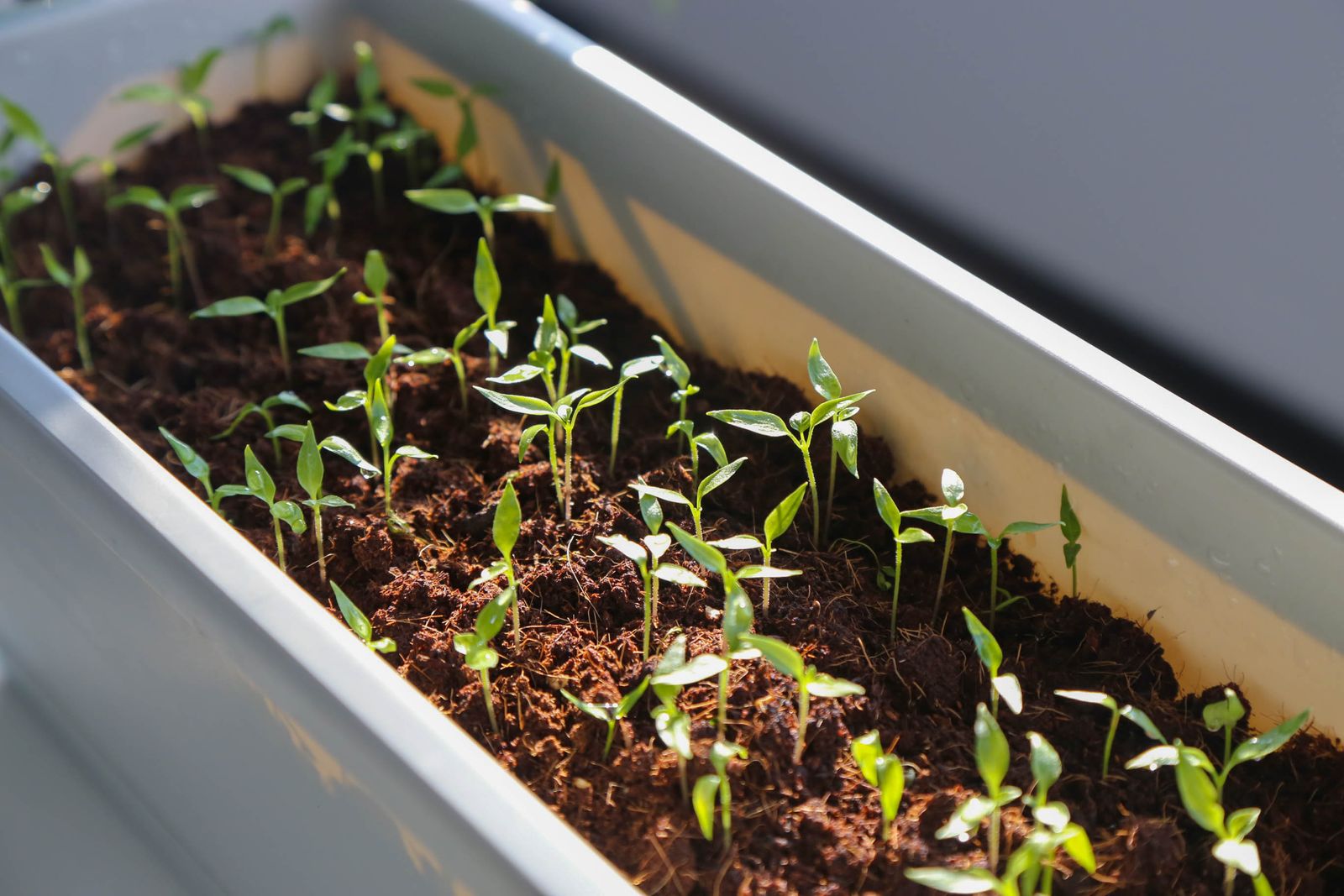
Our growing season runs from the middle of May to early October, which is short for tomatoes and peppers. Starting them indoors in March and April gives them a six to eight week head start. You do not need a greenhouse, only a shelf, a light and a little patience.
What you need
A simple LED shop light gives seedlings plenty of light if you hang it two to four inches above the leaves and raise it as they grow. Put it on a timer for sixteen hours a day. A windowsill alone is rarely bright enough in an Ithaca March, and seedlings grown there turn tall and floppy.
Use a fine seed-starting mix rather than garden soil, and any container with drainage holes: yogurt cups and egg cartons work as well as trays.
When to sow
Onions and leeks go first, in early March. Peppers and eggplants follow in mid-March, tomatoes in early April, and squash and cucumbers only three weeks before they go out. Our average last frost is around May 15, so we count back from there.
Sow two seeds per cell, a quarter inch deep, and snip the weaker one when the first true leaves appear.
Water and air
Water from below by filling the tray and letting the mix soak it up for half an hour, then pour off the rest. Soggy soil is the main cause of seedlings that collapse at the base. A small fan on low for a few hours a day makes the stems sturdier.
Harden them off
A week before planting, put the seedlings outside in a sheltered spot for an hour, then a little longer each day. By the end of the week they can stay out overnight. Our seed starting workshop in February goes through all of this with trays you take home.