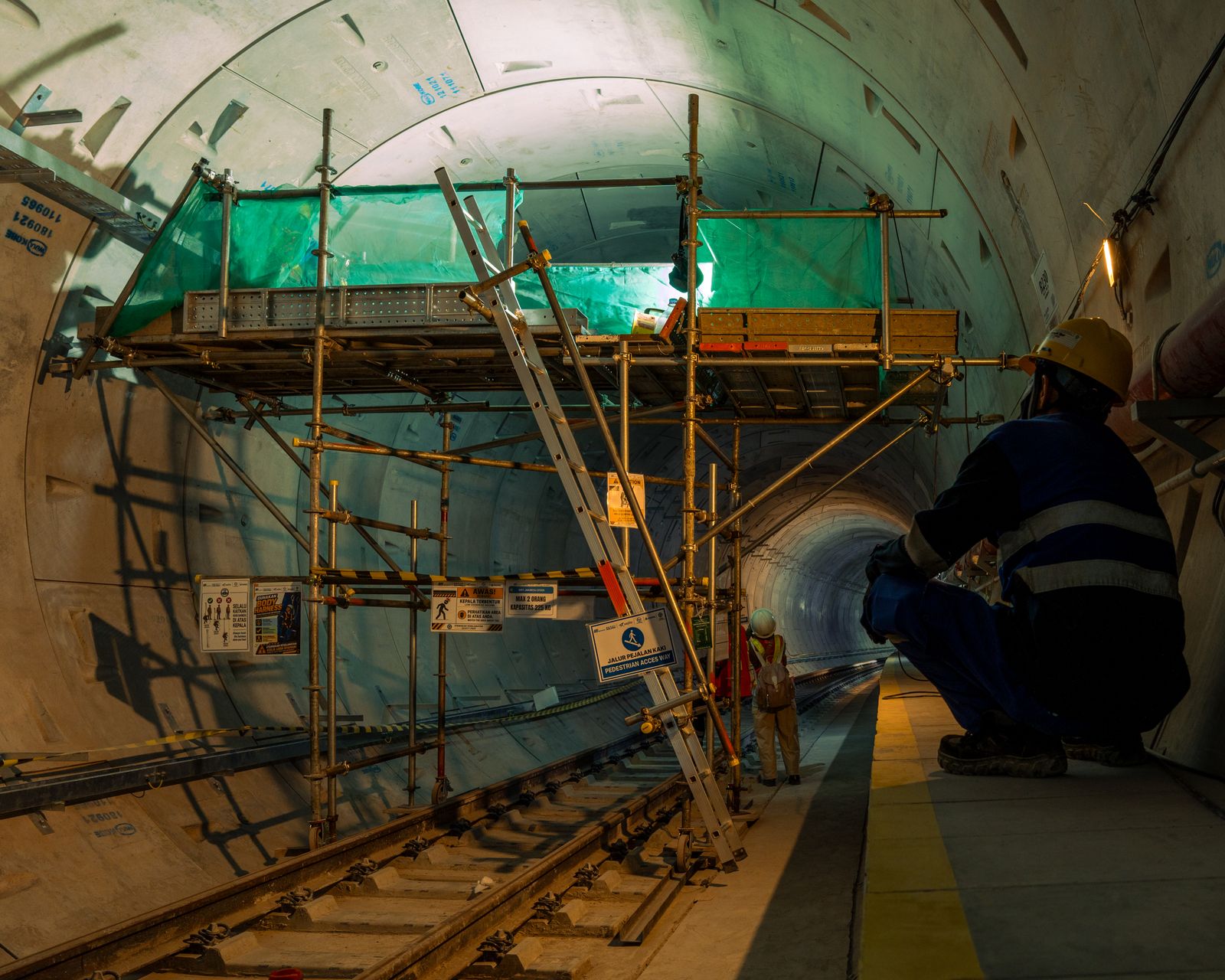
The Saltmarket tunnel carries 31,000 cars a day under the old harbour. It closes at midnight, and for the next five hours it belongs to a crew of forty people in orange jackets who are replacing its lining one concrete ring at a time.
The work started in March and is due to finish next autumn. Each night the crew removes about two metres of the old brick lining, sprays a new concrete shell and checks it before the first buses arrive at 5:15 a.m. If the checks are not finished, the tunnel stays shut and the morning traffic backs up across the Rivergate bridge.
In this video
- 00:00 Midnight: the barriers go down
- 01:12 Taking out the old brick
- 02:40 Spraying the new shell
- 04:05 The 4:30 a.m. inspection
- 05:30 Handing the road back
A race against the first bus
Site manager Halima Osei has run the night shift since the first week. She says the hardest part of the job is not the concrete but the clock. Every task is planned to the minute, and every minute lost at 1 a.m. has to be found again before dawn.
Nobody sees us, and that is the point. If people drive through in the morning and notice nothing, we did our job, said Osei.
What is left to do
About 60 percent of the lining is finished. The crew will move to the north portal in January, where the brickwork is in worse condition and the work will slow to one and a half metres a night. The city’s transport office says the project is on budget at $48 million.
The crew works in two halves. One team removes and cleans, the other sprays and finishes, and they swap ends of the tunnel every hour so that nobody stands still for long in the dust. A safety officer walks the whole length every thirty minutes with a gas meter, and the shift stops at once if the air reading moves.
Drivers can check closures on the transport office’s site before travelling at night. The tunnel stays open to traffic during the day for the whole project.
Sources
- Transport office project report, October
- Interviews with the night crew, filmed over five nights
- Traffic counts from the city’s open data portal