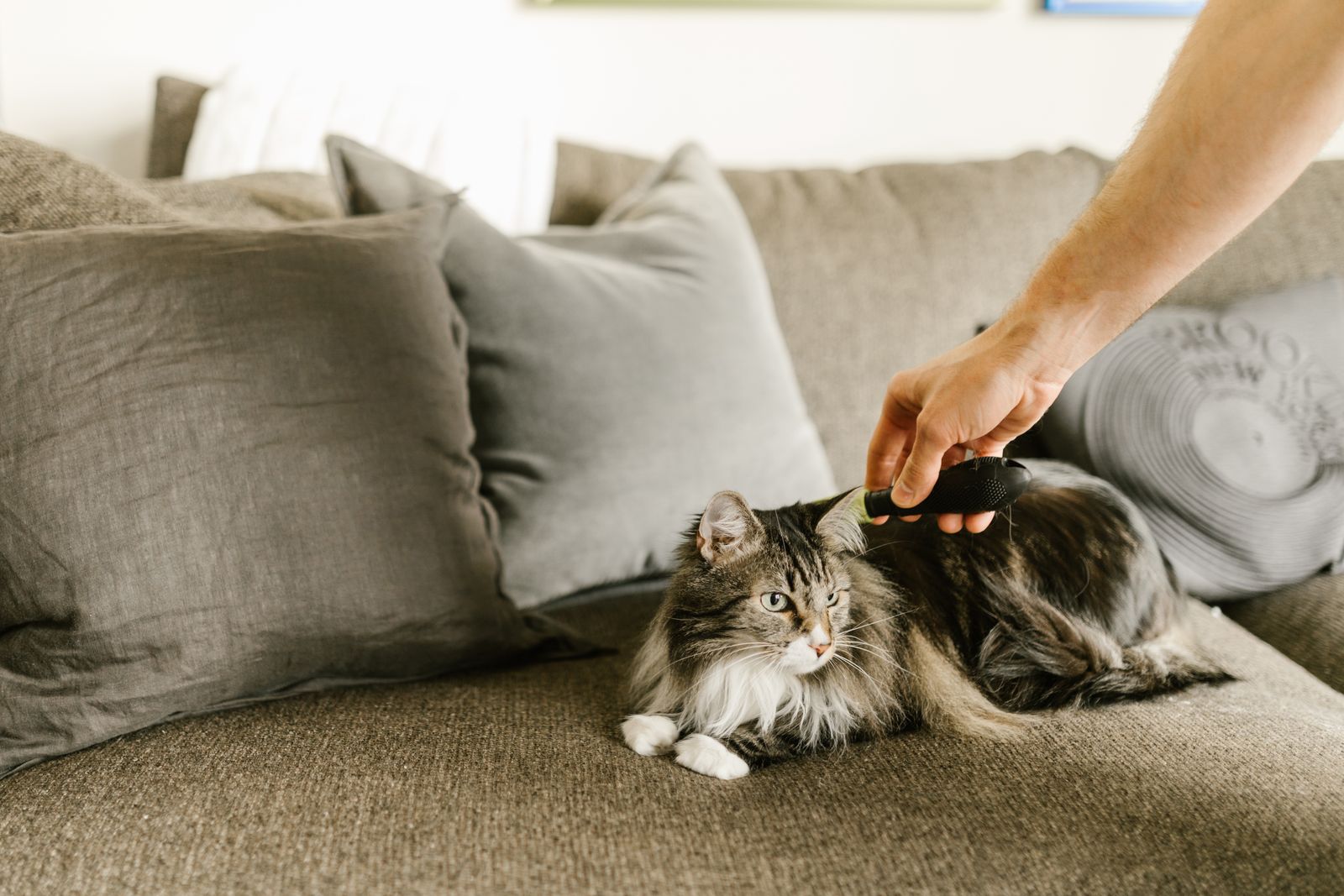
Most short-haired cats keep their own coats tidy, but long-haired cats such as Persians, Maine Coons and Ragdolls can mat within weeks, especially behind the ears, under the arms and on the belly. A short routine at home makes their next groom quicker and gentler.
Choose the tools
A wide-toothed metal comb is the most useful tool for a long-haired cat: it finds tangles before they become mats. Add a soft slicker brush for the body and a fine comb for the face.
Avoid tools that cut the coat unless you have been shown how to use them safely. Mats sit very close to the skin, and cat skin is thin.
Pick the moment
Brush when your cat is relaxed and a little sleepy, after a meal or a nap, not after play. Two to five minutes is plenty, and you can stop as soon as the tail starts to flick.
Start with the places your cat enjoys, usually the cheeks and back, and move to the belly and legs for a few strokes at a time. A treat at the end helps the routine stick.
Work in small sections
Hold the fur at the base, near the skin, and comb the ends first, then work closer to the skin. This avoids pulling, which is what most cats object to.
If you find a mat you cannot comb out gently, leave it and tell us at the next visit. We remove mats in the van with clippers when brushing would hurt.
How often to book
Long-haired cats usually do well with a groom every six to ten weeks, with brushing at home in between. Many owners choose a belly and sanitary trim, which keeps the hardest areas tidy for longer.