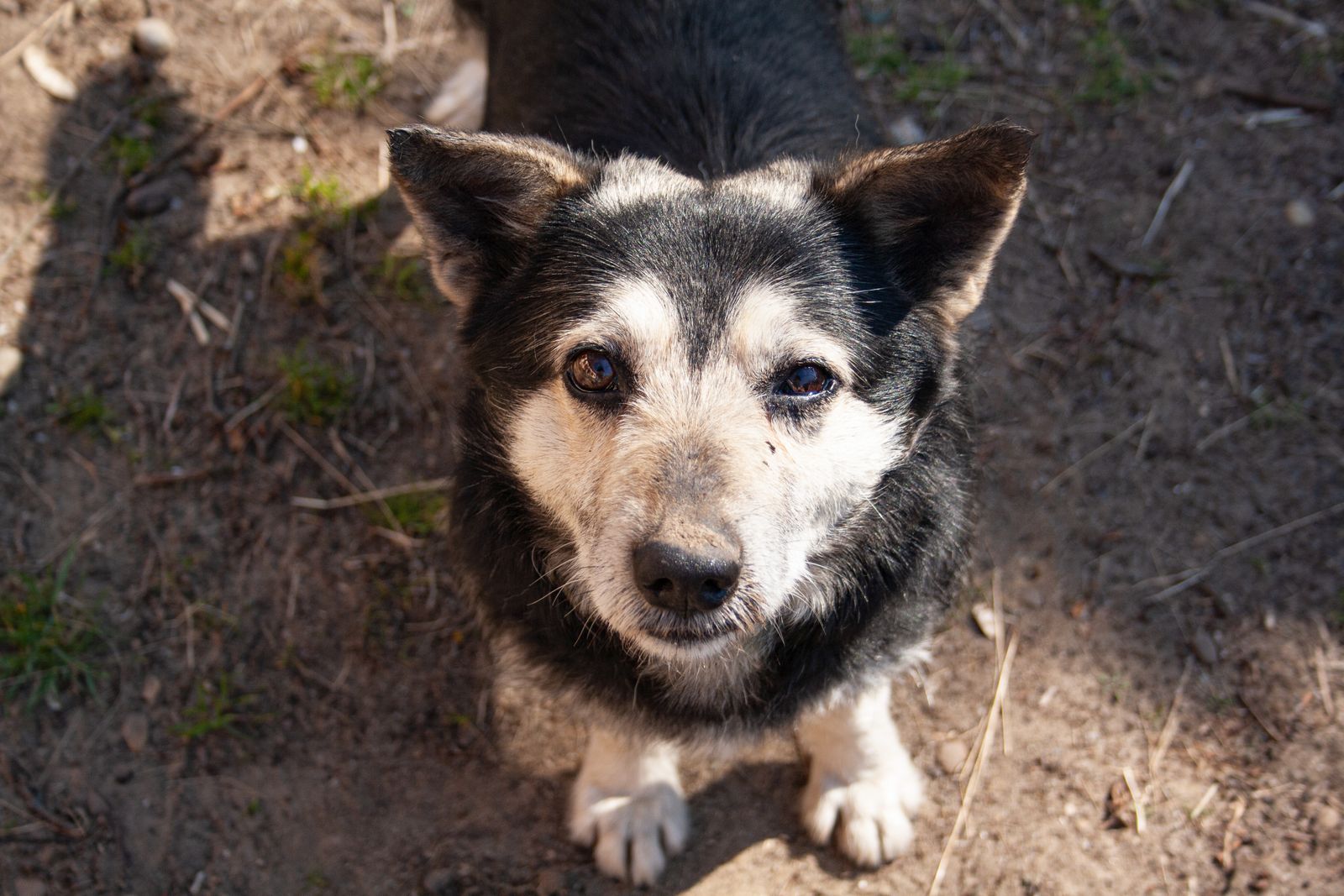
Many of the dogs we groom are over ten years old. For a senior dog, a long car ride, a busy salon and two hours on a table can be a lot. A mobile groom removes the car ride and the noise, and the rest is about adjusting the groom itself.
Shorter sessions
We book older dogs into our senior or anxious pet groom, which gives us extra time to work slowly. Even so, we keep each step short and let the dog rest, sit or lie down between them.
For some dogs, two short visits a month apart work better than one long groom: a bath and tidy one time, a haircut the next.
Support for stiff joints
Our table lowers close to the ground, and we use a thick non-slip mat. We support the hips when a dog stands, avoid lifting legs high, and trim back legs while the dog lies on their side if that is more comfortable.
Warm water and a gentle dryer setting help too. We never leave a senior dog alone on the table.
Eyes, ears and skin
Older dogs often see and hear less, so we let them sniff the tools first and keep a hand on them so they always know where we are. We check the skin as we go and point out new lumps, sores or sore spots, so you can show them to your vet.
Shorter haircuts are often easier for older dogs to keep clean, especially around the paws and the back end.
Your part between visits
Gentle brushing for a few minutes a day, short nails and clean ears make each groom shorter. Tell us about any changes in health or medication before the visit, so we can plan around them.
Ask your vet about your pet’s health.