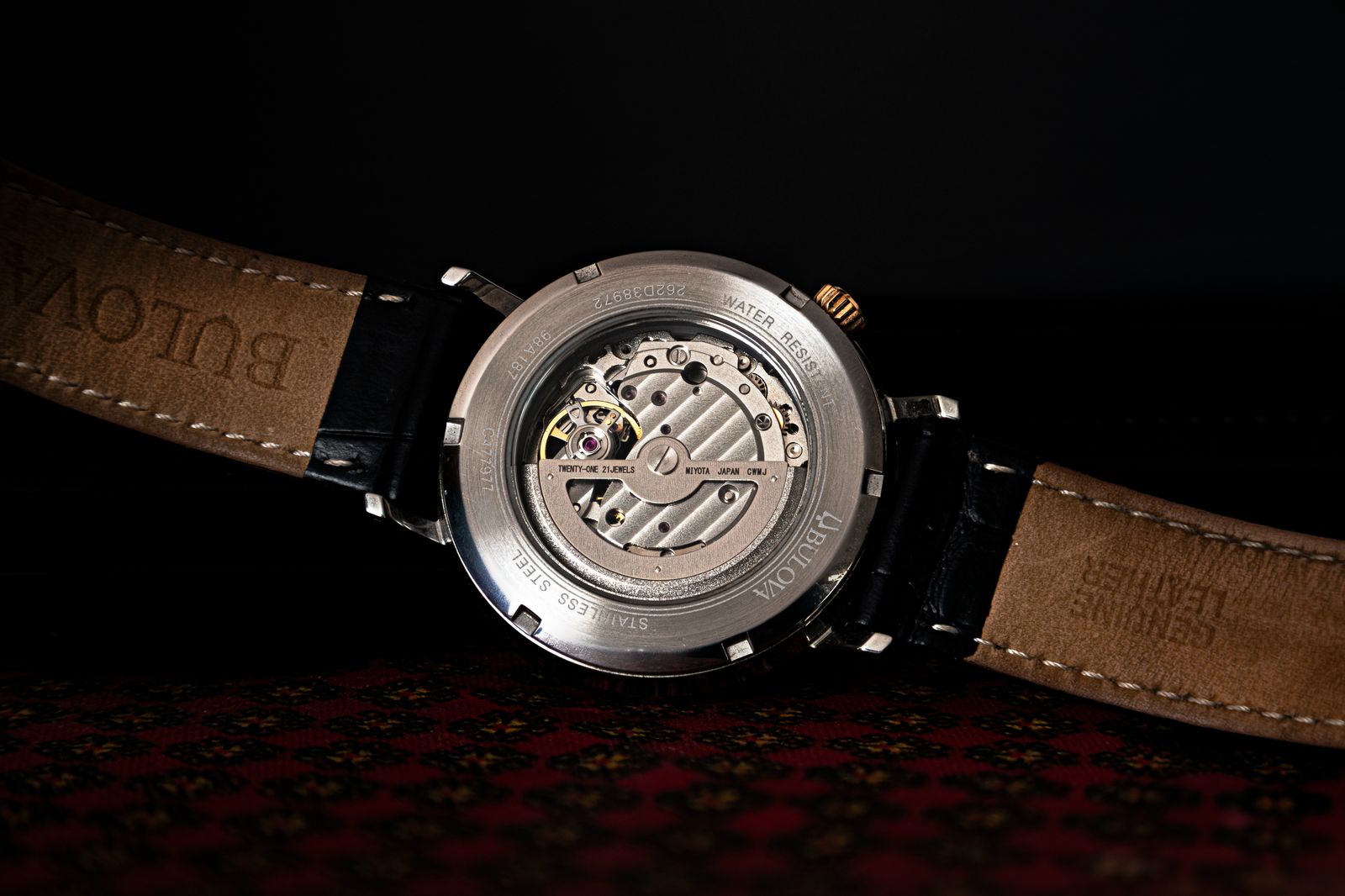
Ask ten watchmakers how often a mechanical watch needs a service and most will say every five to seven years. That is a fair rule, but the watch itself usually tells you when it is time, if you know what to look for.
What happens inside
A mechanical movement has well over a hundred parts, and the ones that move all day sit in jewel bearings with a tiny drop of oil. Over the years that oil thickens, dries out or creeps away from where it belongs. Metal then runs on metal and wear starts quietly.
A service means taking the movement completely apart, cleaning every part, replacing worn ones, oiling it again with the right lubricant at each point, then regulating it and testing the case seals. At our bench a full service takes three to five weeks, mostly because the watch is timed in several positions before it goes back to you.
Signs it is due
The watch gains or loses more than it used to, often a minute a day or more. The power reserve is shorter: it stops overnight when it once ran for two days. The crown feels gritty when you wind it, or the date changes slowly around midnight.
Moisture under the crystal is urgent. Bring the watch in the same week, because water rusts steel parts fast and turns a service into a restoration.
Why waiting costs more
A service on a watch that still runs is usually a fixed price. Once worn parts have damaged the plates or the balance staff has broken, parts have to be made or sourced, and the bill can double.
Our mechanical full service starts at $295 and comes with a two-year warranty. We open the watch first and quote in writing, so you know the price before any work starts.
Between services
Wind a manual watch at the same time each day, keep watches away from strong magnets such as speakers and tablet covers, and have the water resistance tested once a year if you swim with it. That test takes fifteen minutes and costs $10.