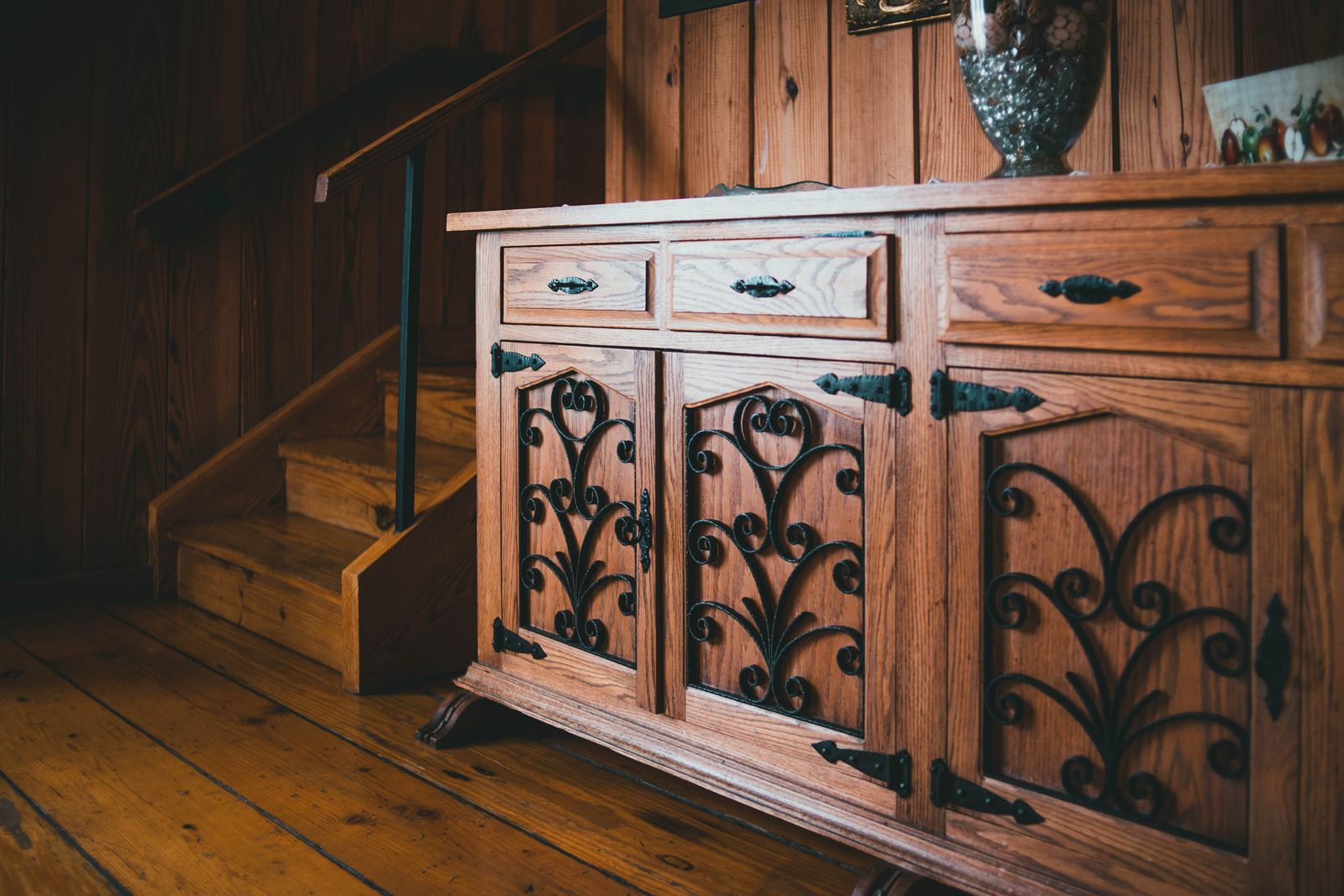
Almost every project we take on includes at least one piece the client will not part with, and we are glad of it. Inherited furniture gives a room a history that no showroom can sell. The trick is to give it room and context so it looks chosen rather than stored.
Give it space
A dark, heavy piece needs breathing room around it. Clear the wall it stands on, hang one piece of art or a mirror above it and keep the surface simple: a lamp, a bowl, a stack of books. Crowding it with other dark furniture makes the whole room feel heavy.
Repeat its tones
Pick up the wood or the metal of the piece somewhere else in the room: a picture frame, a side table, the leg of a chair. That repetition tells the eye the piece belongs. A rug that includes a little of the same colour helps too.
If the piece is very orange-toned, pair it with greens, blues and warm whites rather than more warm wood.
Update without ruining it
Dining chairs can be reupholstered in a modern fabric, and old lamps can be rewired with new shades. Before painting or refinishing a solid wood antique, ask a restorer whether it has value worth protecting. A good clean and a coat of paste wax often bring back more than you expect.
Move it somewhere new
Sometimes a piece simply works better in another room. A sideboard can become a television console, a bedroom dresser or storage in an entry. During our consultation we look at every inherited piece and suggest where it will shine.
And if a piece truly does not fit anywhere, photograph it well, write down its story and offer it to another family member. Keeping the memory is often enough.