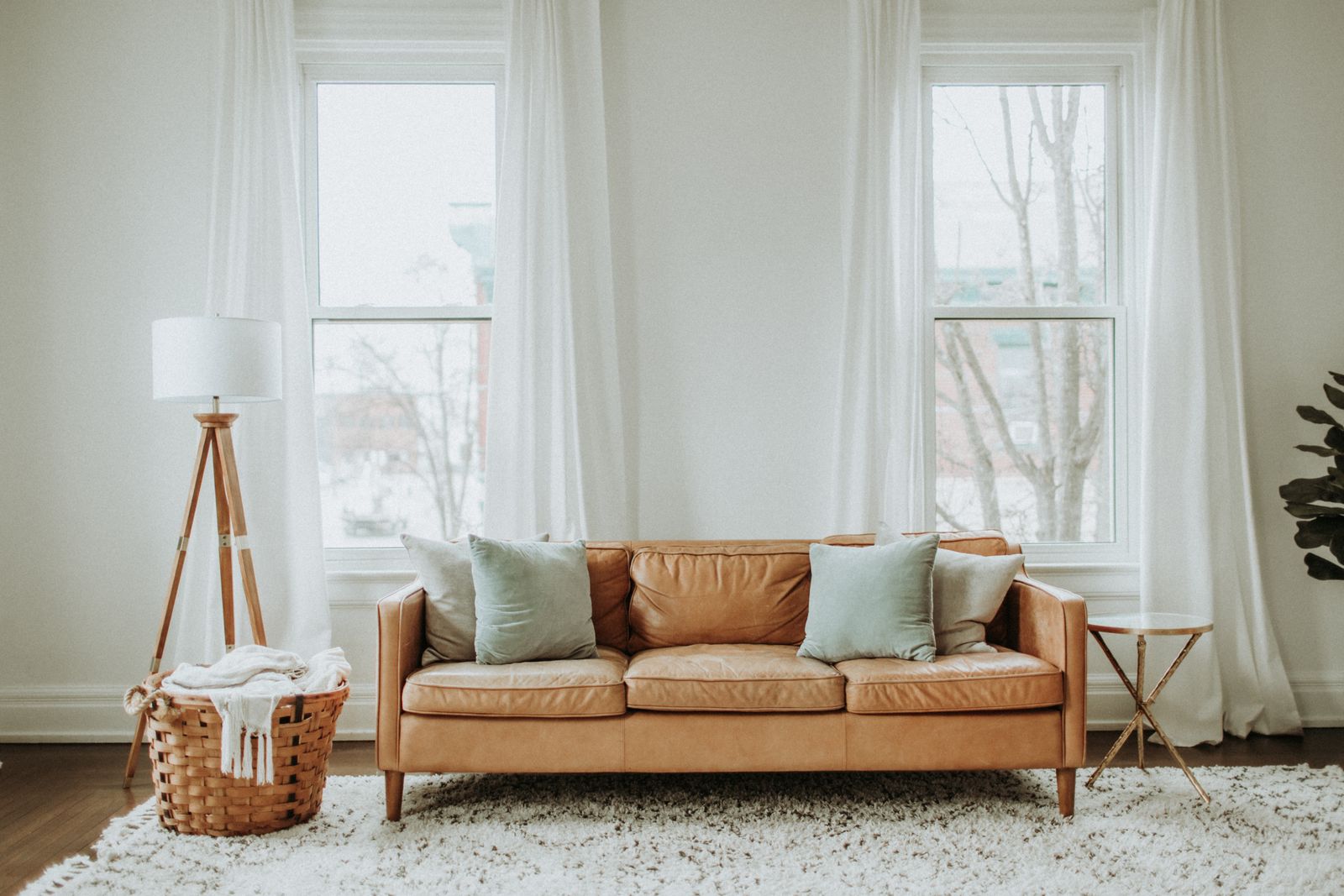
If we could change one thing in most living rooms we visit, it would be the rug. A rug that floats in the middle of the floor makes the furniture look scattered and the room look smaller. A larger rug pulls everything together.
The front legs rule
In a living room, the front legs of every sofa and chair should sit on the rug. This anchors the seating as one group. In larger rooms, all four legs of every piece can sit on the rug, which feels generous and calm.
Leave between twelve and eighteen inches of bare floor around the rug on each side where you can. In open-plan rooms, the rug defines the living area, so it can stop short of the walls on purpose.
Common sizes and what they fit
An eight-by-ten rug suits a sofa and two chairs in a typical family room. A nine-by-twelve works for a larger sectional or a sofa facing a pair of chairs. Five-by-eight is usually too small for a living room and better in a study or at the end of a bed.
Before ordering, outline the rug on the floor with painter’s tape and leave it for a day. Walk around it and sit on the sofa. It is the cheapest test in interior design.
Texture in a hot climate
Flat-woven wool, jute blends and low-pile rugs feel cooler underfoot and are easier to clean of desert dust. Save thick, high-pile rugs for bedrooms, where they soften the sound and feel good on winter mornings.
Layering
If the rug you love is too small, lay it over a larger plain jute or sisal rug. This is a good way to use a vintage piece without buying a new one at a size you cannot find.