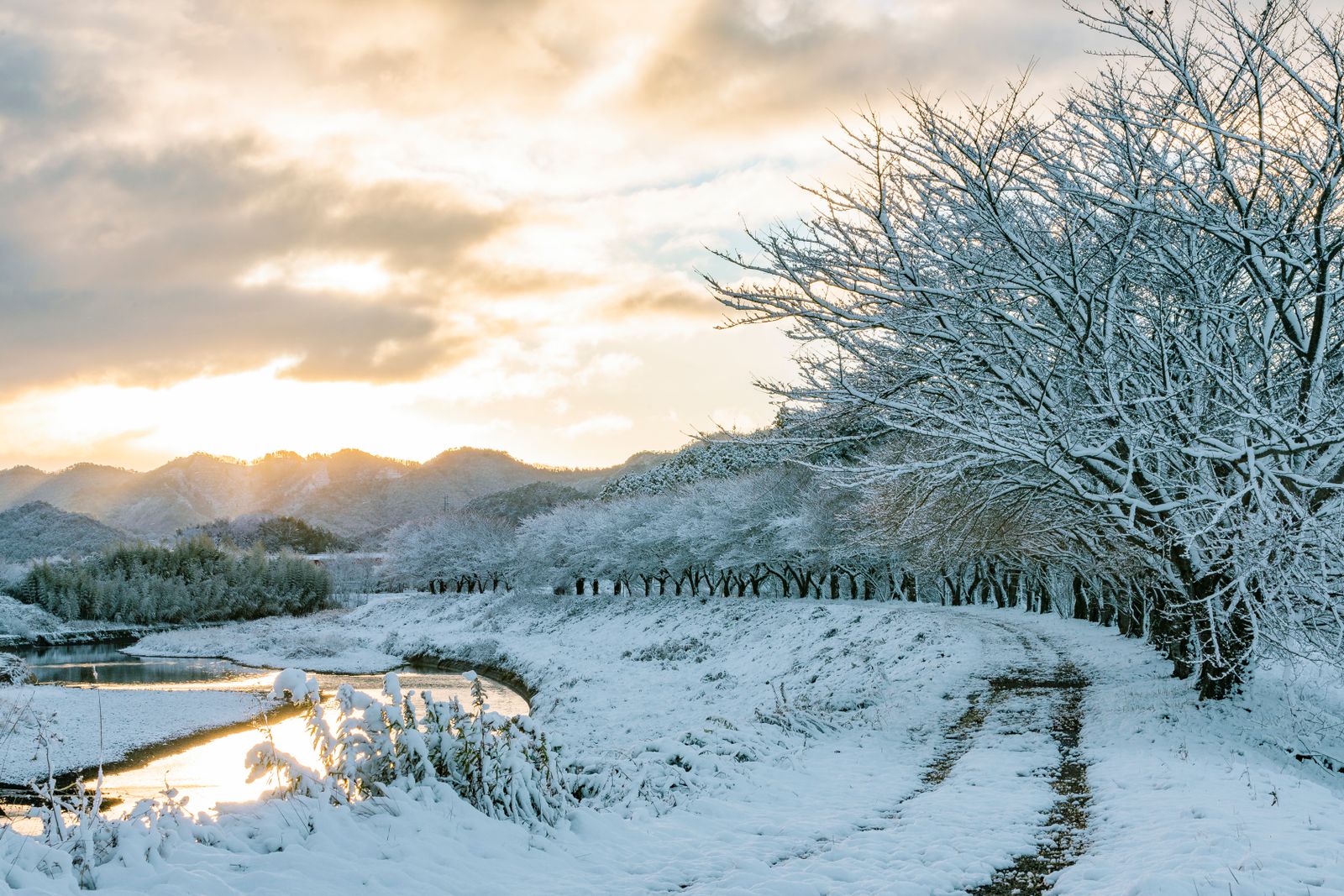
In summer the river path in Burlington belongs to everyone. Runners, cyclists, families with strollers, teenagers on the rocks below the bridge. By December it belongs to almost no one, and that is when I like it best.
I walk it most mornings before eight, from the old mill to the second footbridge and back. Three miles, give or take. In January it is often dark when I start and grey when I finish, and on the coldest days the only other person I see is the man with two greyhounds in matching coats.
What the cold takes away
Winter takes the colour out of the path, then the sound. The leaves go first, then the birds, then the noise of the water itself as the edges freeze. By February the river is a white road with a dark ribbon running down the middle, and the loudest thing is my own boots on the packed snow.
What is left is the shape of things. You see the town differently when the trees are bare. The backs of houses you never noticed in summer. The old rail bridge, which turns out to be beautiful. The long line of the hills beyond the lake, which were always there behind the leaves.
Summer shows you a place. Winter shows you how it is built.
Why I keep going
People ask why I walk in the cold, and the honest answer is that it is the only hour of the day when I am not deciding anything. The path decides. Left at the mill, right at the footbridge, back the way I came. My mind, which spends the rest of the day choosing between sentences, gets an hour off.
Most of my essays begin on that path. Not as ideas, exactly. More as a mood, or a single sentence that arrives somewhere near the second bridge and will not go away. By the time I am home and the kettle is on, it has usually become a first line.