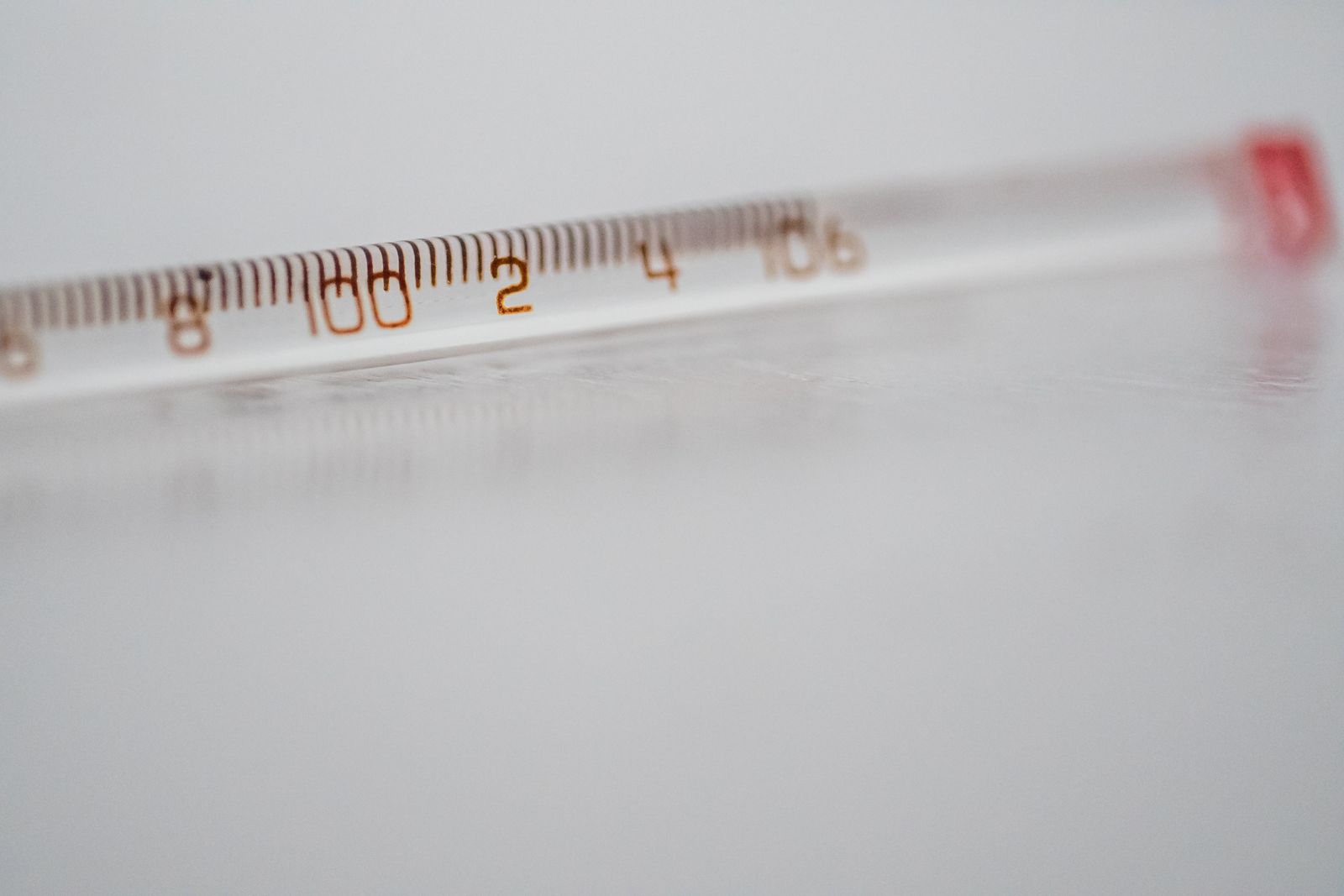
When you have a fever, it can feel as if your body has lost control of its temperature. In fact it has done the opposite: it has deliberately turned up the thermostat.
The thermostat in your brain
A small region at the base of the brain called the hypothalamus keeps your core temperature close to a set point, usually around 37°C (98.6°F), though it varies from person to person and through the day. When your immune system detects an infection, immune cells release signalling molecules. Some of them reach the hypothalamus and raise the set point by a degree or two.
Your body now thinks it is too cold. That is why a fever often starts with chills and shivering: muscles twitch to make heat, and blood vessels near the skin narrow to keep it in. When the set point comes back down, the opposite happens. You feel hot, your skin flushes and you sweat.
A fever in four stages
- Alarm: immune cells spot an infection and release signalling molecules.
- Reset: the hypothalamus raises the temperature set point.
- Climb: shivering and narrowed blood vessels push the body up to the new set point.
- Break: the set point drops again, and sweating brings the temperature down.
Why turn up the heat?
Fever is found across many animals, including some reptiles and fish that move to warmer spots when they are infected. That pattern suggests it has been useful for a very long time.
Laboratory research suggests that a few degrees of extra warmth can help some immune cells work faster and can make conditions harder for some microbes. How much this helps people with ordinary infections is still being studied, and researchers are careful not to overstate it.
What we know, and what we don’t
- Known: fever is a controlled rise in the body’s set point, not a failure to cool down.
- Known: the chills and the sweats are two ends of the same process.
- Still asked: how much a fever shortens everyday infections in humans.
If you are worried about a fever, yours or someone else’s, the right people to ask are a doctor, a pharmacist or your local health service. They can take your age, health and symptoms into account in a way an article cannot.
This is general information, not medical advice.