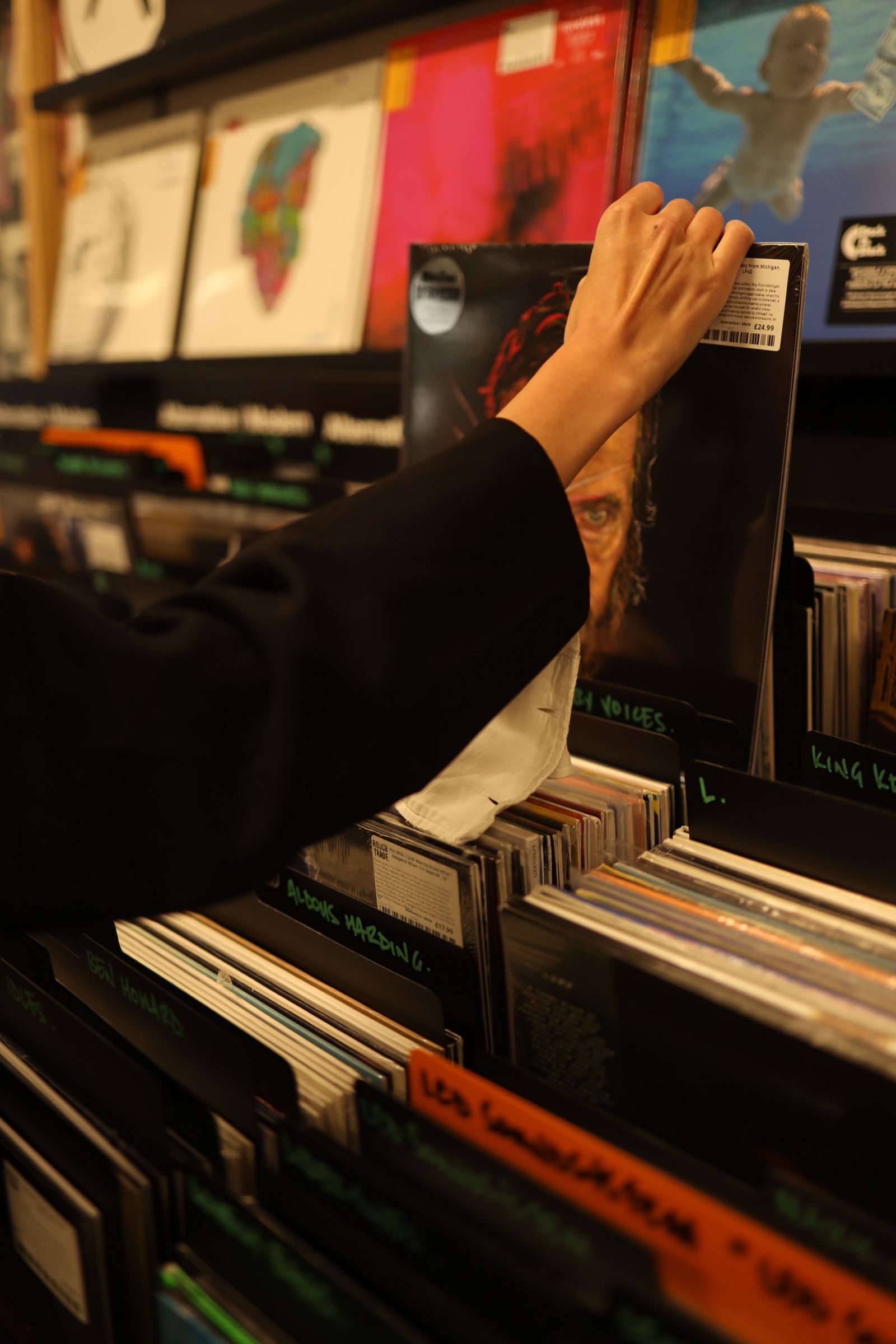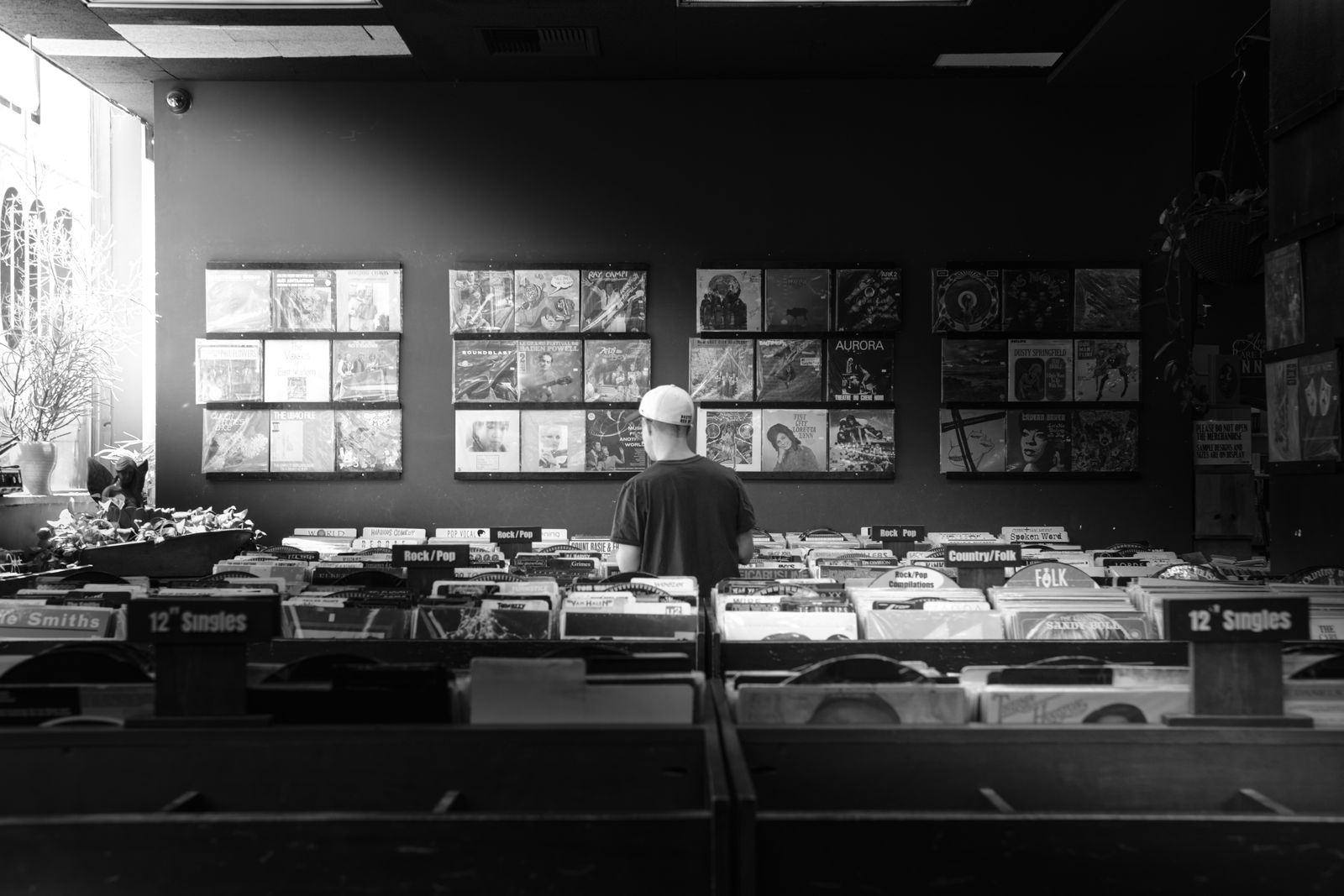
Halfspeed Records is the shop I take visiting friends to, because nothing explains record collecting faster than its wall of 45s. It covers one whole side of the shop, floor to ceiling, thousands of singles in paper sleeves, sorted not by artist but by the colour of the label.
It sounds like chaos. It works beautifully. You learn quickly which colours mean soul, which mean country, which mean the local pressing plant that made everything for the city’s small labels in the sixties.
The rest of the shop
The LP bins are smaller and well picked, with a strong rock and electronic section. The counter is made from two old speaker cabinets with a plank across the top. There is always something good on the shop turntable and a handwritten card saying what it is.
From the wall this time
- Velvet Hollis, Mercury Lane, 7-inch, $4
- A local garage band single on blue vinyl, $3
- Two instrumental soul sides, $7 for both
How to dig the wall
Bring patience and clean hands. Pick a colour, start at the top and work down. Pull the singles out with two fingers on the sleeve, never the record. There is a small turntable at the end of the wall for 45s only, and the staff do not mind you playing a dozen.
A wall of singles is the most honest way to browse: no covers, just labels and luck.
Prices are on yellow stickers, and most singles are three or four dollars. The rare ones are behind the counter, but ask: they will play you anything.
Open every day but Monday. On the first Saturday of the month there is a swap table by the door where you can trade singles one for one.
I have learned more about the music of this city from that wall than from any book. Every label colour is a small studio, a few local players and a run of a few hundred copies, and most of them are still waiting in paper sleeves.