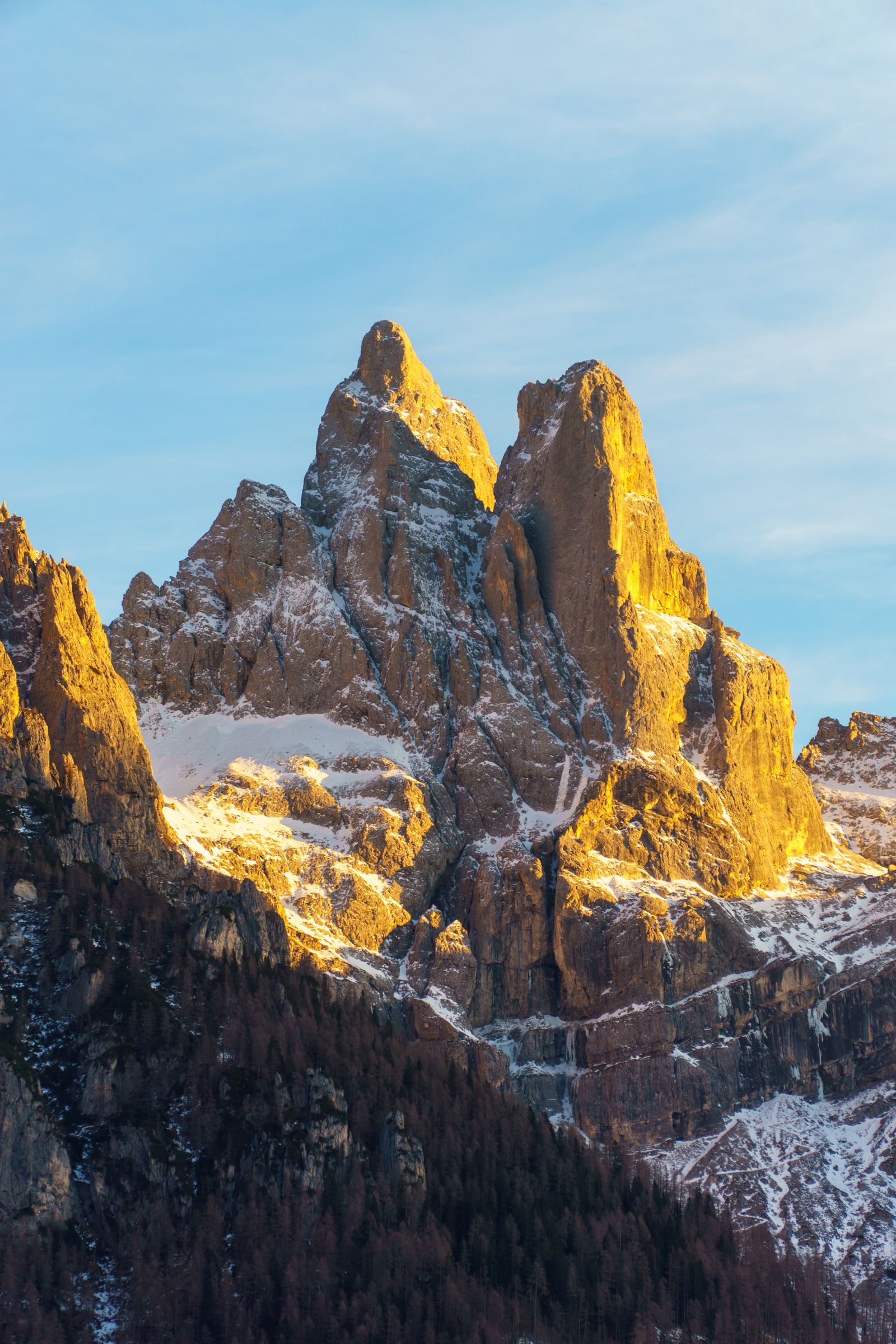
There is a moment in the Dolomites that people here call enrosadira: the few minutes after sunset when the pale limestone glows pink. Most visitors stay for that and leave. We stayed for what comes after, the blue hour, when the colour drains slowly from the sky and the peaks turn cold and silver.
For five evenings in September Teo set up the camera at a different place above the tree line, and we waited. These are a few of the frames, and what it took to make them.
Where we stood
We based ourselves in Cortina and used the lifts to get high in the afternoon, then walked to a viewpoint and waited for the sun to go down. One night we slept at a mountain hut, Rifugio Lagazuoi, at 2,752 metres, so we could photograph the blue hour and the sunrise without a walk in the dark.
What was in the bag
- Camera
- One body, one zoom lens
- Support
- A small travel tripod
- Light
- Two head torches
- Warmth
- Down jacket, gloves, hat
- Time
- Forty minutes after sunset
How to photograph the blue hour
The light changes fast and then slowly. In the first minutes after sunset, expose for the sky and let the mountains go dark. Twenty minutes later, the sky and the rock are almost the same brightness, and that is when the best frames happen. A tripod is essential: exposures were often several seconds long.
The mountains do not go dark. They go quiet.
Getting back down
Lifts stop running in the early evening, so a blue-hour photograph means either a mountain hut for the night or a walk down in the dark. We chose huts, booked weeks ahead, and kept the walks short and well marked.
Good to know
Mountain huts in September close earlier than you think, and the last lift times change through the season. Check both before you go up, and keep a margin for the walk.
We came home with fewer photographs than we expected, and better ones. Waiting is most of the work.