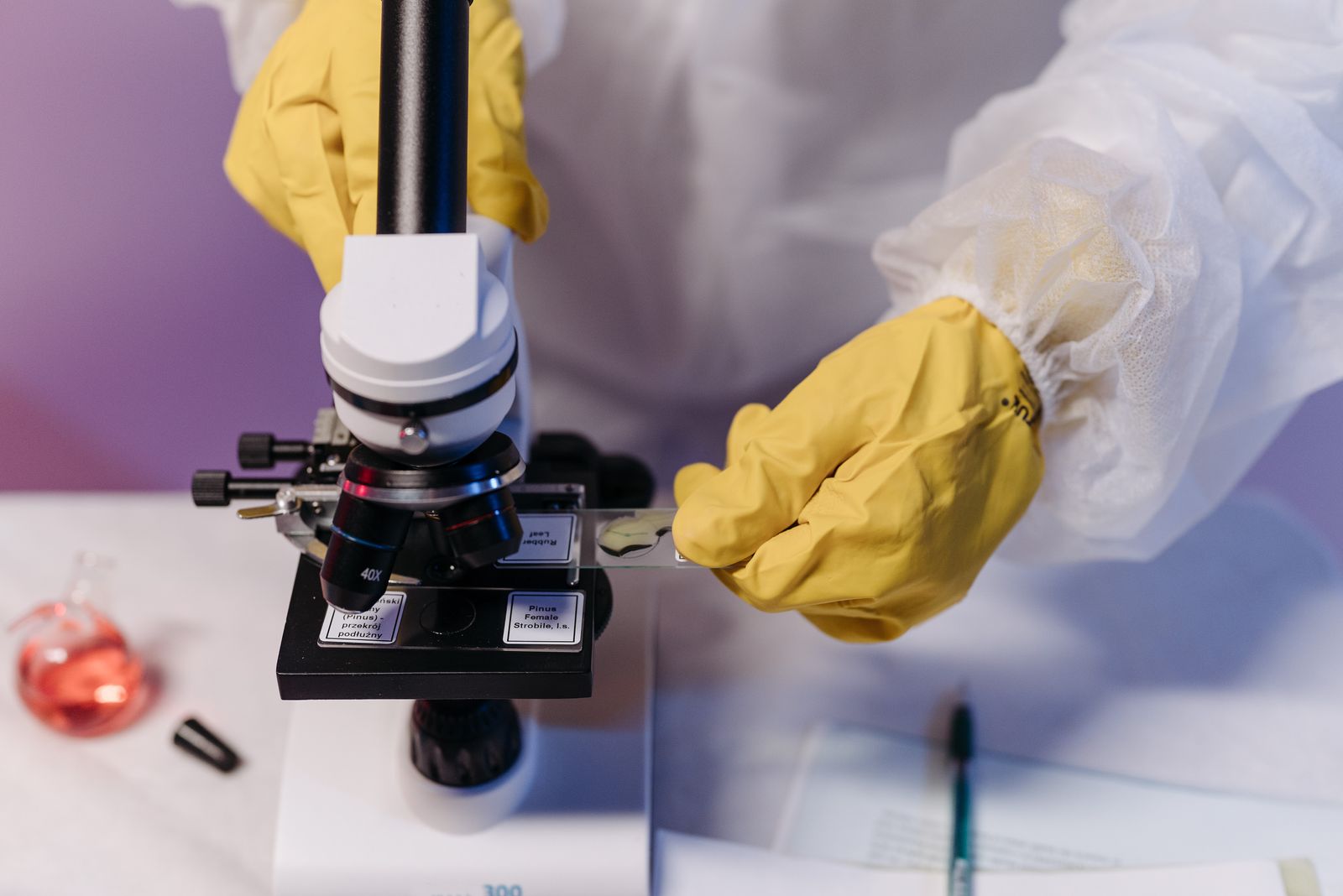
Marcus Obi is a research technician at the Corrin Institute, a fictional cell biology lab in our example, where he has kept the incubators, freezers and experiments running for eleven years. We asked him what research looks like when it does not work.
How often do experiments fail?
Most of the time, if by failing you mean not giving the answer you hoped for. A lot of what we do is finding out which idea is wrong. That is still a result.
What goes wrong most often?
Contamination, first. Cells grown in a dish are delicate, and a single stray bacterium or yeast can take over a culture in a couple of days. Then there are the ordinary things: a reagent that has gone off, a machine that drifted out of calibration, a step done in a slightly different order.
How do you know a result is real and not one of those?
Controls. Every experiment runs alongside versions where we know the answer. A dish that gets everything except the treatment, and a dish where we know the effect should appear. If the controls do not behave, we do not believe anything else on that plate.
Marcus’s three checks
- Did the negative control stay negative?
- Did the positive control show the effect?
- Can someone else repeat it, on a different day, with fresh materials?
What goes in the lab notebook?
Everything. Dates, batch numbers, temperatures, what I spilled, what I did differently. When something odd happens three months later, the notebook is how we work out why. If it is not written down, it did not happen.
What happens to the experiments that did not work?
Too often, nothing. Results that show no effect are harder to publish, so they sit in drawers. That is a problem, because another lab may waste a year repeating them. More journals now accept these negative results, and that is good for everyone.
The lab notebook is the most honest thing in the building.
What would you tell someone starting out?
Expect most days to be quiet and repetitive, and learn to love that. The exciting results only mean something because of all the careful, boring days behind them.