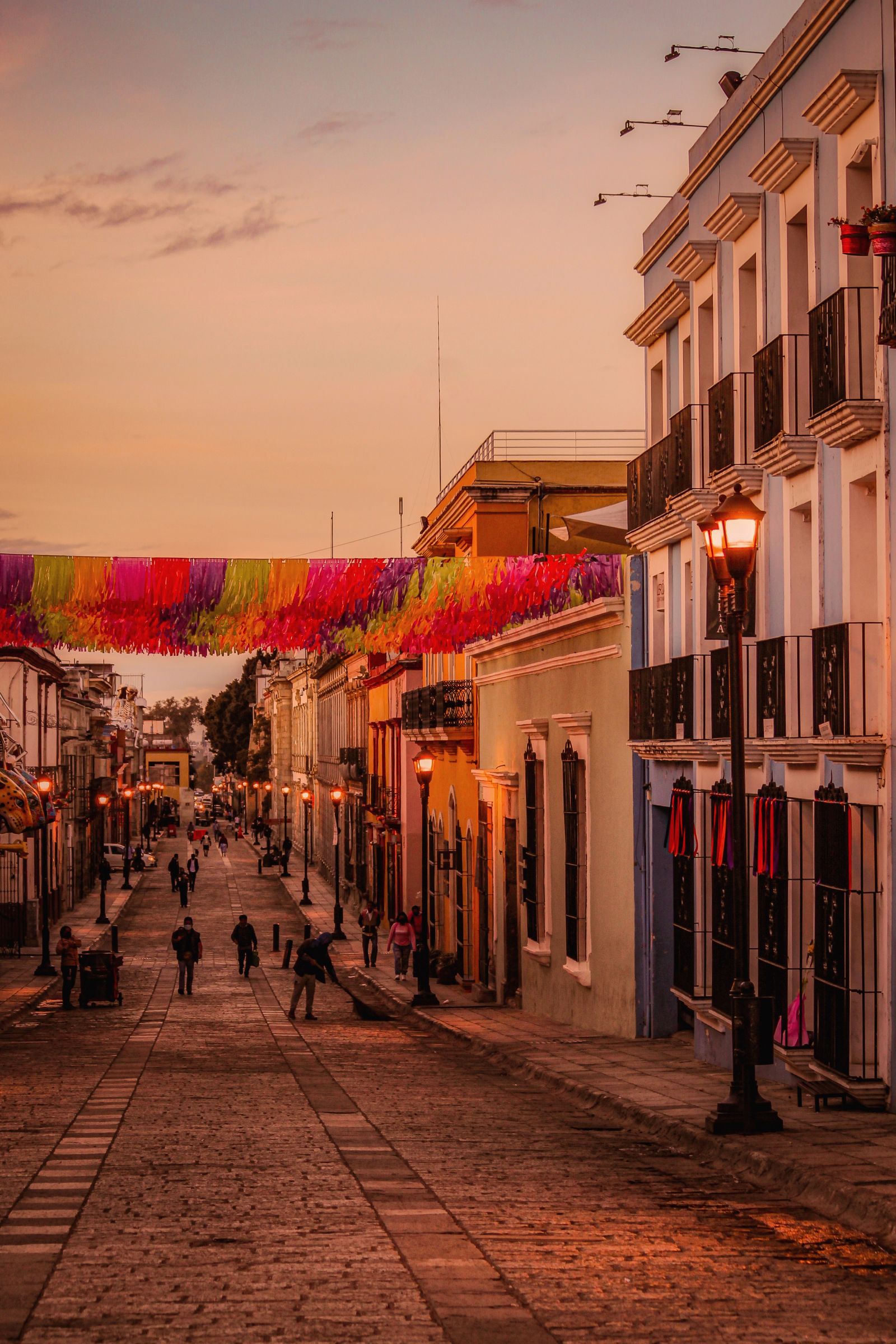
We came to Oaxaca for a week, and stayed twenty-four days. Something about the city makes you want to stop: the light on the green stone buildings, the markets, the sense that everything important happens at a table.
We rented a small flat in Jalatlaco, an old neighbourhood of cobbled streets and painted walls a few minutes’ walk from the centre. It had a kitchen, a roof with a view of the hills and a neighbour, Señora Inés, who decided after two days that we needed feeding.
Our market
Most visitors go to the big markets near the zócalo. We did too, once, and then found our own: a small neighbourhood market where we bought tortillas still warm, tomatoes, chiles and a cup of hot chocolate made with water, the Oaxacan way. By week two the stallholders knew us.
Learning to cook
Señora Inés taught us three things: a simple black bean soup, how to toast chiles without burning them, and a weeknight mole that she said was not a real mole, which was still the best thing we cooked all year. We paid her in groceries and help in her garden.
Day trips from the city
- Teotitlán del Valle, a weaving village in the valley
- Monte Albán, the ancient city on the hill above town
- Hierve el Agua, mineral springs over a cliff edge
- The Tlacolula Sunday market
Rhythm
We wrote and edited in the mornings, walked in the afternoons when the sun was kinder, and ate our big meal at three, like everyone else. Evenings were for the zócalo, where whole families come out to walk, eat corn and listen to the brass band.
Staying still is how a city starts to talk to you.
Twenty-four days was not enough. It rarely is. But it was long enough to have a favourite bench, a favourite tamale stall and a neighbour who still sends us photos of her garden.