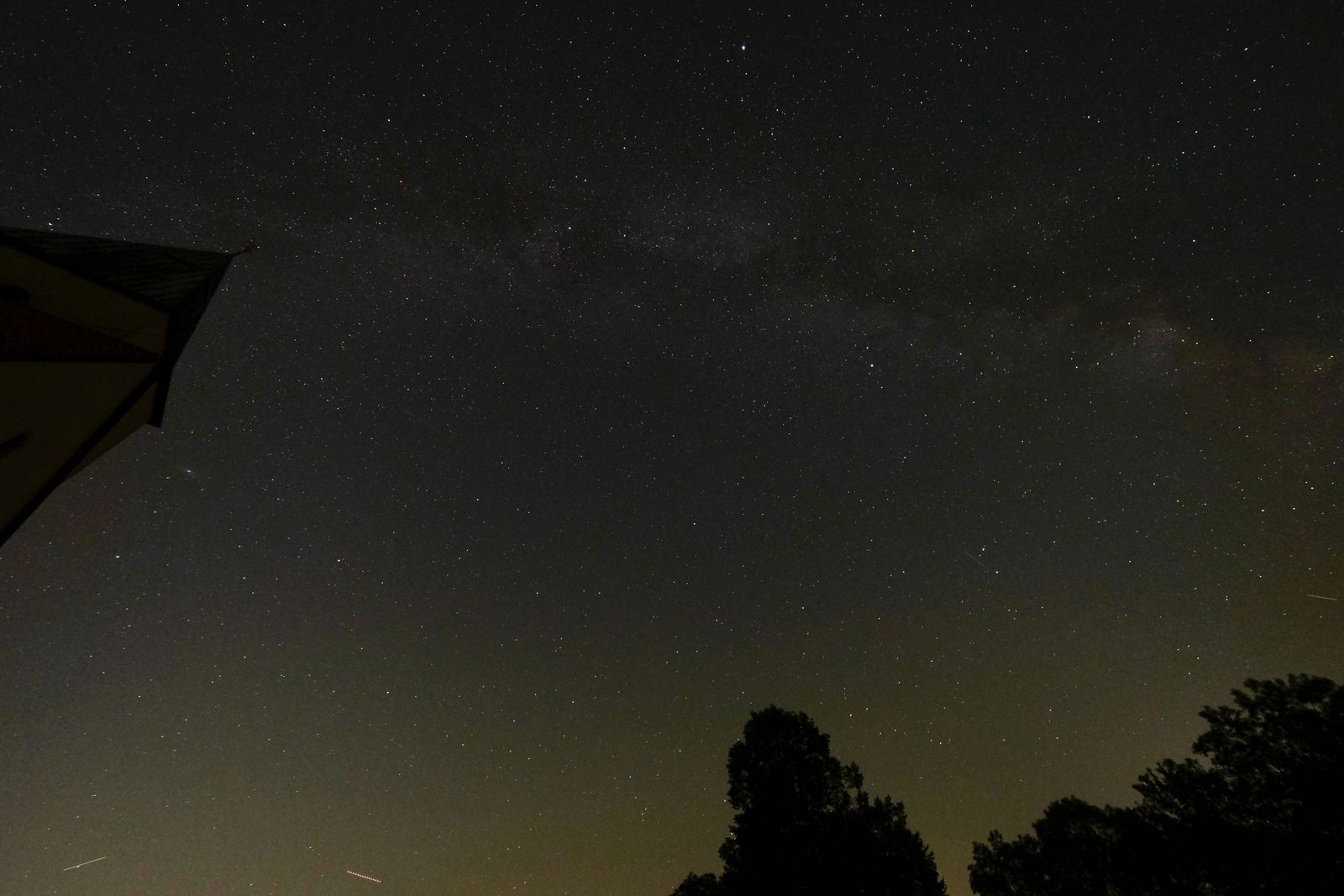
Step out of a bright kitchen into the garden at night and, for a moment, you can hardly see your hand. Give it a few minutes and the path appears. Give it twenty and you can pick out faint stars. Your eyes have changed which cells they rely on.
The fast part: the pupil
Within seconds, the pupil, the black opening in the middle of your eye, widens to let in more light. It is quick, but it only does a small part of the job.
The slow part: rods and cones
At the back of your eye, the retina has two main kinds of light-sensing cell. Cones work in bright light and see colour and fine detail; they are packed into the centre of your vision. Rods are far more sensitive, see no colour and are spread around the edges.
In bright light, the rods are overwhelmed: a light-sensitive pigment inside them, called rhodopsin, has been bleached. In the dark, the pigment slowly rebuilds. Cones recover first, in about ten minutes. Rods take longer, and keep getting more sensitive for around half an hour.
Twenty to thirty minutes, in order
- Seconds: the pupil widens.
- First ten minutes: cones adapt and then level off.
- After that: rods take over as their pigment rebuilds.
- Around half an hour: night vision is close to its best.
Two tricks astronomers use
Rods are not very sensitive to deep red light, so a dim red torch lets you read a map without undoing your night vision. And because rods sit away from the centre of your vision, a faint star can be easier to see if you look slightly to one side of it. Astronomers call this averted vision.
What we know, and what we don’t
- Known: dark adaptation happens in two stages, cones then rods.
- Known: one bright light, even a phone screen, resets much of the progress.
- Still asked: why the speed of adaptation varies so much between people.
Changes in night vision can have many causes. If yours has changed, an optometrist or doctor can check your eyes properly.
This is general information, not medical advice.