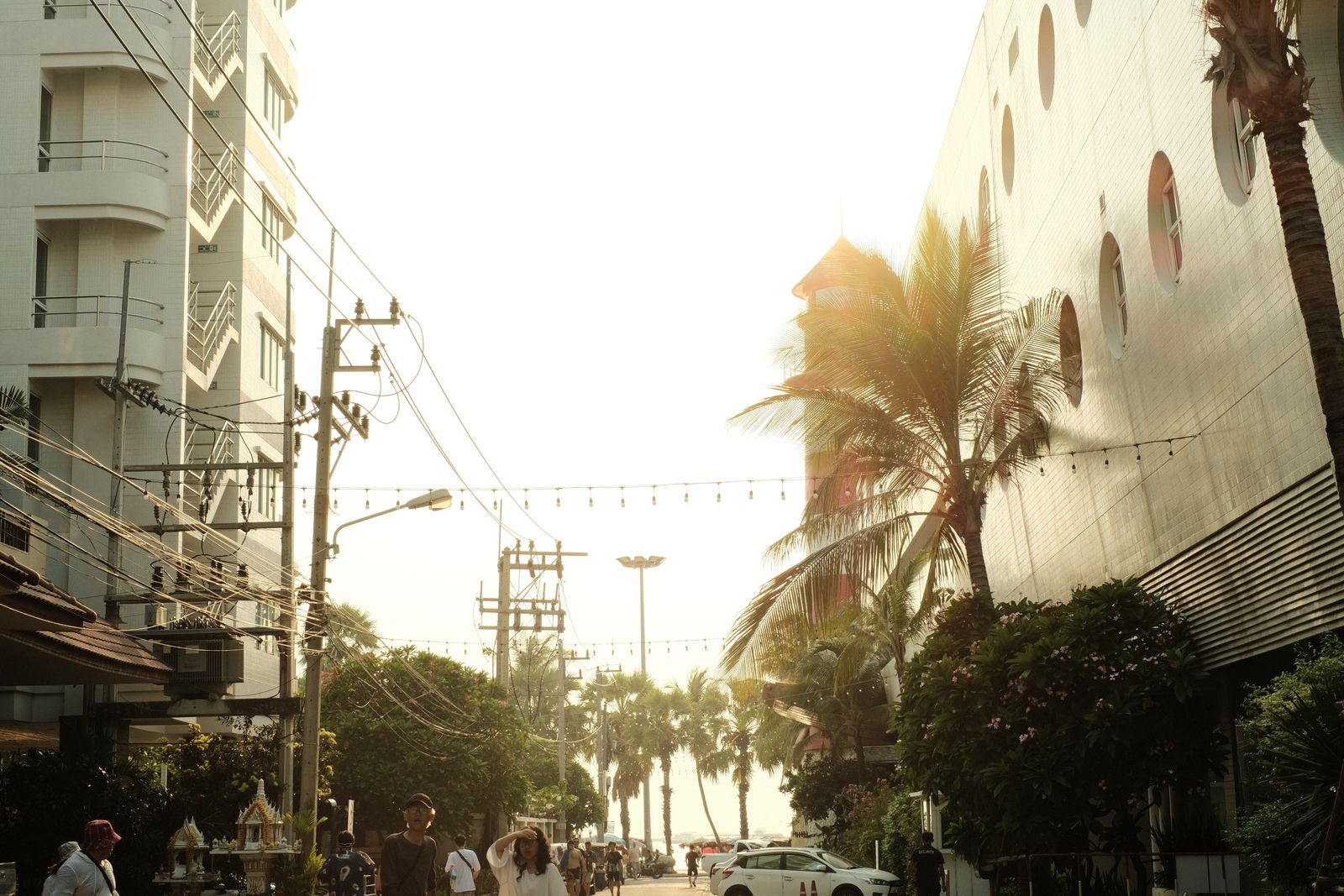
On a still summer night, a city can stay several degrees warmer than the farmland around it. Climate scientists call this the urban heat island, and it is one of the best-measured effects of how we build.
A new study from the Harrow Valley Climate Lab, a fictional research group in our example city of Port Alder, shows the pattern clearly. The team fixed 60 small temperature sensors to lamp posts across the city and the surrounding fields and recorded every ten minutes for a whole summer.
What the sensors found
- Warmest night gap
- 6.1°C
- Average night gap
- 2.8°C
- Average day gap
- 1.2°C
Fictional study used to illustrate a well-established effect.
Where the heat comes from
The biggest differences were at night, not in the afternoon. That fits what researchers have found in many cities. Dark roofs, roads and brick walls soak up sunlight during the day and release it slowly after dark, while open fields cool off quickly.
Four reasons cities run hot
- Storage: asphalt, concrete and brick store heat and give it back at night.
- Fewer plants: trees and grass cool the air by evaporating water; paving does not.
- Waste heat: engines, air conditioners and machines add heat directly.
- Street canyons: tall buildings trap warmth and block the breeze.
What helps
The Port Alder sensors also showed how much shade matters. Streets with a full row of mature trees stayed noticeably cooler than bare streets just a block away, and a park in the centre of the city was cooler still.
Cities around the world are trying several fixes at once: planting street trees, painting roofs in light colours that reflect sunlight, adding green roofs and keeping open water and parks. Each helps a little. Together they can take the edge off the hottest nights.
The hottest part of a heatwave is often the night that never cools down.
How we know
The effect itself is measured, not modelled: thermometers in the city compared with thermometers outside it, over many seasons. The details differ from city to city, but the basic pattern shows up almost everywhere people have looked.